Most I-751 petitions take between 28 and 32 months to process. Once you file, USCIS will send you a receipt notice (Form I-797C) that automatically extends your conditional green card for 48 months, so your status stays valid while you wait. You should expect a long wait, but with the right evidence and preparation, most cases are approved without an interview.
Let’s talk about everything you need to know about the I-751 removal of conditions on your lawful permanent resident status.
This is for people who have received a two-year green card with conditions, and now they have to get the conditions removed.
Key Takeaways:
• The average I-751 processing time is currently 28 to 32 months, depending on your service center and the complexity of your case.
• The biggest delay factors are increased fraud detection reviews, service center backlogs, and whether USCIS schedules an interview.
• While your I-751 is pending, USCIS issues a receipt notice (Form I-797C) that automatically extends your conditional green card for 48 months, so you can continue to work and travel.
• The main risk areas that can slow things down or cause problems include Requests for Evidence (RFEs) for insufficient marital documentation, being called in for a Stokes interview, or filing the wrong form (I-90 instead of I-751).
Don’t leave your future to chance.
Table of Contents
Conditional residence is when you have obtained a marriage-based green card before your marriage is two years old.
You've obtained lawful permanent resident status inside the United States either by coming to the United States on an immigrant visa or by adjusting your conditional resident status inside the United States.
To cut down on immigration fraud, USCIS and federal law require that, once your conditional green card expires, you file a form to have those conditions removed.
In order to cut down on immigration fraud, USCIS, and federal law allow that at the end of the two years of your green card, you're going to have to file a form and get those conditions removed.
In other words, you're given a sort of temporary conditional residence status, and this is the process of actually removing the conditions from your green card.
This is about getting you on that path to citizenship or "full lawful permanent residence status and sort of securing your future inside the United States."
There's a deadline for removing conditions on lawful permanent residence status.
At the end of the two years towards the end, those last 90 days, there's a window there where you have to and can apply for removal of conditions.
So you can't apply early. You have to file, basically, one year and nine months after your green card start date.
We're going to walk through an example of that so I can explain how it all works.
Let's say Mary received her green card on July 1st, 2020. It would have a start date. It would say resident since July 1st, 2020.
So, of course, two years after that would be July 1st, 2022, and Mary would be eligible then to file her I-751 90 days early, which would be April 2nd.
Now I wouldn't recommend that Mary file it on April 2nd. I would wait a week or 10 days.
You don't want to file it too early because they could, in theory, issue a receipt for it, keep your check, and then go ahead and deny the case for filing too early.
So there's that 90-day window I was talking about, between April 2nd, 2022, and July 1st, 2022, when the green card actually expires.
So in that 90-day window, you have to file the I-751, pay the filing fee, and get the case on file.
That's how you start the process of removing conditions.
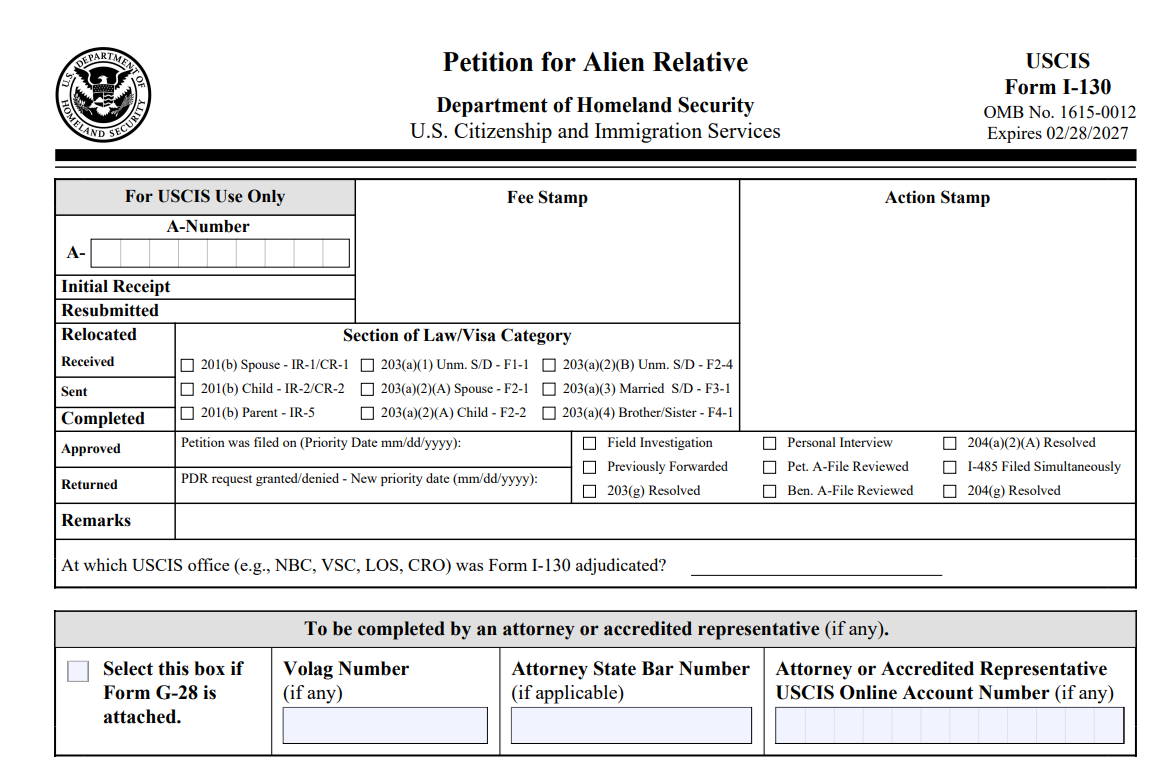
The name of the form that you file to remove conditions is the I-751.
We're going to talk about the I-751 application, but this is a form that is jointly filed.
So you'll remember back when you started this whole process to get the initial two-year green card, there were tons and tons of forms that you had to file.
You had to file the I-130, and if you're in the United States, the I-485 for the adjustment, the I-765 for the work card, the I-131 for the travel document, and then the I-864 for the affidavit to support.
You also had to do the medical.
The good news is that with the removal of the conditions, the process is a bit more streamlined and simpler, and you'll just need to complete an I-751.
So it's a form that is usually filed by the US citizen and the foreign-born spouse, the person with the conditional residence.
You fill out that form and send it to USCIS along with the filing fee and your marital evidence. Then, you can wait for the receipt notice.
Sometimes people get confused, and they file an I-90. An I-90 is to simply renew a green card. It is to renew lawful permanent residence status for people other than conditional residents.
In other words, the only way to get the conditions removed is by filing the I-751, not the I-90.
So, how long does the I-751 actually take right now?
As of early 2026, USCIS reports that 80% of cases are completed within 28.5 months in Service Center Operations and 32 months in all Field Offices.
These numbers can shift significantly depending on which USCIS service center is handling your case. The Texas Service Center, Nebraska Service Center, and California Service Center each have their own backlogs and processing speeds, so two people who file on the same day can have very different wait times.
USCIS reviews have included fraud detection procedures over the past several years. Every I-751 now undergoes additional vetting and review, creating a massive backlog. There is currently no premium processing option for the I-751, so there is no way to pay to expedite it.
When our firm started handling I-751 cases about 13 years ago, approvals typically took 2 to 3 months. Those days are long gone. The processing time has steadily increased, and the current 28-to-32-month range reflects the new reality of how USCIS operates.
The good news is that USCIS now issues a receipt notice (Form I-797C) that extends your conditional permanent resident status for 48 months beyond your green card's expiration date. This means you can continue to work legally, travel internationally (with your passport, expired green card, and receipt notice), and maintain your lawful status while the case is pending.
We recommend keeping your receipt notice with you at all times, as it serves as proof of your status throughout the waiting period.
Just as before, when it was our burden to prove that we had a valid marriage to get the conditional permanent resident card, you need to remember when you're talking about the I-751, that it is our burden as the person seeking to have the conditions removed, to prove to the satisfaction of USCIS by a preponderance of the evidence that this marriage is ongoing, that this marriage is valid, that this marriage was real and that this marriage was not entered into in order to obtain an immigration benefit.
Now they are going to look at your case with a little bit more scrutiny because now you're two years in, now you should have plenty of evidence.
You know, there are a lot of excuses and reasons why, when you are first getting started, you might not have a lot of marital evidence when you show up at the initial green card interview.
But at this point, you've probably been together for three years, and you should have tons of evidence of the marriage.
And so, when you file your I-751, you really want to make sure that you file as much information as possible.
You want to have good, competent, and thorough evidence.
I was talking to a guy on my Immigration Answers Show (and if you're not following us there, you should, you can find us on YouTube or Facebook), and this fellow was thinking that he could just mail in a few bank statements and a little bit of new evidence.
I would say that is the wrong mindset, the wrong attitude, and the wrong way to be thinking about this.
You want to be able to prove beyond a reasonable doubt that your marriage is still ongoing.
So now let's talk about evidence of marriage.
We're going to talk about what you need to file and what to submit to make your application as strong as possible.
We're going to go over our marriage evidence list, and if you want to download that list, you can go to www.hackinglawpractice.com/marital-evidence.
So every marriage is different, and each will have different kinds of evidence.
But some of the kinds of evidence that you're going to want to submit are:
• leases and living arrangements,
• utility bills,
• electric bills,
• gas bills,
• receipts for large purchases,
• employee emergency listings from work demonstrating that you've listed your spouses on emergency contact,
• employment documents showing a new marital status,
• mortgage agreements,
• rental payments,
• apartment leases,
• life insurance,
• medical insurance,
• automobile insurance,
• car titles,
• deeds for any property that you've bought or anything that's going to show you both living together at the same address,
• text messages or Skype messages,
You want to submit evidence from your Amazon account or from joint Costco or Sam's Club memberships.
You can show trips taken together.
You can show major purchases that you've made.
You can show family photographs. You don't want to send too many, but again, you want to show a history of this relationship over the last two years.
You don't want to just submit three pictures of you wearing the same clothes taken two days before you file for your I-751.
Think of it as a stew: the more ingredients you include and the longer you let the case simmer, the stronger the case and the better-tasting the stew will be, and the more likely it is that USCIS will believe this is a valid marriage.
You can always submit evidence from friends and family - affidavits notarized by a notary, that establish that this is a real marriage.
You can share social media posts featuring you together.
There's just an unending list of ways that you can be creative in submitting marital evidence.
And again, if you want to download our list for free, you can visit our website www.hackinglawpractice.com/marital-evidence.
All right. So when I first started doing these I-751s around 13 years ago, USCIS would issue receipt notices very quickly, and they would approve the cases in two or three months.
Now, these cases are literally taking 28-32 months, if you can believe that it takes nearly three years now for I-751s to get approved.
Under the Trump administration, they added a lot of "fraud detection" checks, so these cases are given higher scrutiny.
This has led to long, long delays in the processing of these I-751s.
Leave it to USCIS to come up with a crafty workaround for their slow, slow processing of I-751s.
When you file your I-751, you'll receive a receipt notice.
That receipt notice in and of itself will serve as an automatic extension of your conditional permanent residence status by now 48 months.
In a way, it is almost as if the conditions were removed, but of course, they weren't.
While the case is pending, the extension letter and your old green card will be your proof of status.
Your proof of eligibility to work, you will remain in conditional permanent resident status while that case is being processed by USCIS.
If you need to travel, you would take your old green card, you would take your passport, and you would take your receipt notice, and that would be your proof of status.
Now let's talk about travel while your I-751 is pending.
You don't want to travel in those last few days of your initial conditional green card.
Instead, wait until you get your receipt notice.
While USCIS is slow on lots of things, they are generally pretty good about getting that receipt notice automatically generated, which then extends your lawful permanent status by 48 months while they process the case.
When you travel, as I said, bring your passport, I-751 receipt notice, and original green card.
If you do all that, you should hopefully have no problem re-entering the United States.
Of course, you don't want to take any trips for more than six months because you never want to do that as a lawful permanent resident.
When we file the I-751, we do so with the goal of avoiding an interview.
So USCIS has the authority to waive an I-751 interview.
I would say that there's an interview in about 35% or 40% of the cases.
So, less than half of these cases have an interview.
Your goal is to submit enough high-quality evidence to demonstrate that this is a real marriage.
Now we've submitted applications that are literally many inches thick.
When you do that, you do it in a way that sort of overwhelms them with evidence.
If you do it correctly, you are very likely to have your interview waived.
But if you do have an interview, those can be tough.
You might even have a Stokes interview, where they separate the couple and ask them lots of questions.
If the marriage has been on shaky ground, or if they submit just a little bit of evidence, you're going to get called into USCIS, and you're basically going to have to prove the marriage one more time.
It shouldn't be a problem if it's a legit marriage, if you've been living together, doing the kinds of things married people do, and establishing a good record.
I would say Stokes interviews for I-751s are pretty rare; maybe they happen in fewer than 10% of cases.
Your goal is to try to get the I-751 approved without an interview.
And this is one of the ways that I think working with an experienced immigration lawyer, people who know how to put these cases together, really pays dividends because it's going to make your case go faster, and it's more likely to be approved, and it's going to make it more likely to be approved without an interview.
Sometimes, sadly, the US citizen or LPR spouse who sponsored the foreign national for lawful permanent residence passes away.
At that point, you can file for the removal of conditions.
You can demonstrate that the marriage was valid, that the US citizen or LPR spouse, but that the petitioner in the original case passed away. You can file an I-751 on your own when the spouse has passed away.
Now, let's talk about filing for the I-751 after divorce.
In our office, we talk about this as an I-751 solo.
An I-751 solo is different from an I-751 joint, which is the traditional way that people file it, where you file that I-751 with signatures from both parties.
Our office has handled a ton of cases where the US citizen and the foreign national have divorced.
The marriage is no longer ongoing, and the foreign national is attempting to get the conditions removed all on their own.
The more frequent and popular way to satisfy the I751 filing requirement after divorce is the good-faith marriage exception.
You're going to have to prove the marriage up just like you would in an I751 jointly-filed case.
We must prove that the marriage was real, but that, for whatever reason, the marriage did not work out.
What you'll have to show is that the couple loved each other and built a life together. But at the end of the day, the marriage didn't last, and they decided to get divorced.
In order to avail yourself of this I-751, good-faith exception, you're going to have to demonstrate that the divorce is final, or you're going to have to be pretty darn close, because they'll send you a request for evidence to demonstrate that the marriage is over.
They can't approve an I-751 solo if the marriage is ongoing.
Sometimes you file the I-751, and then the divorce is still pending.
So that's again a situation where you're going to want to hire an attorney.
It can actually get pretty close because sometimes you get divorced right before the two years are up, and you're thinking that they might approve the case and not know that you're divorced, and that can be its own mess.
Amany and some of the other lawyers in our office handle a lot of these, and they are very good at these, but they can really, really be a mess.
Now, when you file the good faith exception, you still have to submit all that evidence.
But the best evidence of all is if you can get the US citizen or LPR petitioner, the person who sponsored you in the first place, to participate.
When people contact our office, I always tell them to think of this as a red light, yellow light, or green light.
Red light means my ex-spouse is going to do everything they can to screw me, they're trying to kick me out of the country. And that situation happens more often than you might think.
In yellow cases, the former spouses stay out. They don't care one way or the other. They're going to just stay out of it.
Then, of course, the green light means that they would help support our application. They would file an affidavit going through the relationship and state clearly that this was a real marriage that just didn't work out.
That also happens more than you might think.
So a lot of times, we'll tell people before the divorce gets too hot and heavy, let's try to get a statement from both you and a US citizen or green card holder or your petitioner about the marriage.
We get that statement from them for two reasons.
We want to nail down their story; we want to make sure that this was, in fact, a good-faith marriage.
We want to make sure that if USCIS comes knocking on the door of that US citizen’s house, we already have their story locked down, so that if they change their story, we have a sworn affidavit from them stating that the marriage was valid.
In this scenario, we can argue that the new statement USCIS obtained was obtained under duress because the person was scared and USCIS officers were mean to them.
So getting that down on paper and sworn in front of a notary at the beginning of the process is one of the smartest things we do.
And it's one of the best ways to try to demonstrate that the marriage was real.
You're still going to have to prove up through all the other evidence that we talked about earlier; it's just the same amount of stuff, but now you're going to have to do this extra work of demonstrating why the marriage didn't work out.
Sometimes you have to explain about infidelity.
Sometimes you have to explain why it didn't work out, and it can get a little messy.
So we try to stay sort of high-level, above the fray.
We try not to get involved in any fighting between the two spouses and just do what we can to get the I-751 approved.
More Immigration Tips and Resources

One of the questions that we often get is whether or not someone should file for their citizenship before their I-751 is approved.
Now, when I-751s used to take five or six months, this was never a problem because the I-751 was approved before that window opened for eligibility for citizenship.
Earlier, I explained that you have a 90-day window to file your I-751. If you add one year to that case, those deadlines, when you reach that point, you'll be eligible to apply for citizenship, assuming you are still married.
So now that I-751s are taking more than two years to process, people are applying for citizenship.
At first, I supported this. I thought that was a good idea, but we're currently telling people not to do that because USCIS has made such a mess of it and screwed up so many cases.
So our current advice is to wait until the I-751 is approved before you file for the N-400.
The only exception to this would be if someone were in an emergency situation. For instance, if they're trying to get their parents here to the United States, and they need their citizenship sooner rather than later. Or for some kind of travel reason or other life reasons, they wanted to become a citizen or lawful permanent resident.
We would have them file that sooner rather than later.
Now, let's talk about when people file their I-751 late. A lot of times, people will miss that two-year deadline.
It actually happens more than you think.
I've had people file this I-751 two years late, and three years late.
I even once had a fellow from Canada apply nine years late.
When you find yourself in that situation, you are going to have to give a good reason as to why you failed to file it on time.
Now, in my experience, USCIS has almost always forgiven this.
They don't really hold people to that higher standard.
They seem to take any reason as a valid reason. Now, of course, you shouldn't plan on that.
You shouldn't apply late on purpose, but if you find yourself missing the deadline, or, as I mentioned earlier, sometimes people file the I-90 instead of the I-485, I'd recommend using an experienced immigration attorney or lawyer. This helps you through this part of the process, to have them handle the I-751 because you're going to have to explain to the satisfaction of USCIS that you were trying to follow the rules, you just missed the deadline, and you didn't file it on time.
U.S. Citizenship and Immigration Services (USCIS) provides three distinct waivers for those unable to meet the joint filing requirement for Form I-751.
1. An extreme hardship - If we can show extreme hardship to the beneficiary or to a loved one.
2. The good faith exception - That is, where the marriage was valid, it just didn't work out.
3. If the foreign national was the victim of battery or extreme cruelty or if it was an abusive relationship, there's a waiver available for that as well.
So we've handled all three of those kinds of waivers.
They're actually very interesting cases to work on. I think it's definitely a situation where you want to have an experienced lawyer help you with that. I actually just refer all those people to Amany and her team.
We work on these cases a lot, and we pretty much treat them like asylum cases. Like we're battling to try to keep the person in the United States. And the reason for that is that if your I-751 is denied, you're going to be headed to deportation court.
Don't risk a deportation notice over a paperwork error.
Yes. Once USCIS issues your I-751 receipt notice (Form I-797C), your conditional permanent resident status is automatically extended for 48 months. You remain authorized to work in the United States during that entire time. You do not need to file a separate work permit application. If your employer needs verification, show them your receipt notice along with your expired green card.
Yes, but you need to be prepared. When traveling abroad with a pending I-751, bring your valid passport, your expired conditional green card, and your I-751 receipt notice. All three documents together serve as your proof of lawful permanent resident status.
We recommend waiting until you have your receipt notice in hand before traveling. Do not travel in the final days before your green card expires if you have not yet received it. And as always, avoid any trip longer than six months, as that can raise questions about whether you have abandoned your residence.
Technically, yes. You may be eligible to file for naturalization while the I-751 is still pending. However, our current advice is to wait until your I-751 is approved before filing the N-400.
We have seen USCIS create significant problems when trying to process both simultaneously. Officers show up for combination interviews unprepared, or they are only ready to handle one of the two applications. It has been a mess. The only exception would be if you are in an emergency situation; for example, if you urgently need citizenship to sponsor a family member or for travel reasons.
If your I-751 is denied, USCIS will issue a Notice to Appear (NTA) and place you in removal proceedings, which means you will be referred to immigration court. At that point, you will need to prove to an immigration judge that your marriage was valid by showing relevant support documents.
If you receive a denial, contact an experienced immigration attorney immediately. It is not the time to handle this on your own, as this is a serious situation.
You can check your case status online using the receipt number from your I-797C notice. USCIS also offers a case tracker tool and will send you text or email updates if you sign up for notifications through your USCIS online account.
Keep in mind that case status updates can sometimes be delayed, and "Case Was Received" can stay on the screen for many months before the status changes. If you have been waiting significantly longer than the posted normal processing times with no update, you may want to submit a case inquiry or speak with an immigration lawyer about next steps.

Hope you found this helpful. These are all the kinds of things that we talk to our clients about. This is the kind of work that we do.
We handle a ton of marriage-based cases overall.
We always love working with our clients, whom we helped get their original green cards, and we like working with them when they have their conditions to remove.
And, of course, if that marriage has gone bad and we represent both of them, that can cause a little bit of a problem for us and for the spouses.
We, of course, never help anyone get someone deported, so we'd want to fight for the foreign national, but if the US citizen spouse, our former client, would object, we would have to stay out of it.
So it can be a little bit messy when the marriage goes south, but these cases are still winnable.
Overall, we really like helping people get their conditions removed. It's, like I said, an interesting case to work on.
The joint filing requirement is the cornerstone of the I-751 process, yet many couples struggle to provide sufficient 'hard' evidence, such as joint mortgages or tax transcripts. Should you need help with your I-751 application, we can help.