After an overseas I-130 petition is approved, it moves to the National Visa Center (NVC), which handles the next stage of immigrant visa processing. NVC opens the case, assigns a case number, requests the necessary fees and documents, and reviews the submission. The timeline from I-130 approval to an immigrant visa interview can range from 3 to 7 months or longer. Once the case meets the processing requirements, NVC works with the U.S. embassy or consulate to arrange an immigrant visa interview.
My I-130 has been approved for my overseas spouse. Does this mean that I'm almost finished?
If your I-130 petition for an overseas spouse has been approved, you have completed an important part of the family-based immigration process. But I-130 approval is not the same as immigrant visa approval, and it doesn’t automatically schedule your spouse's interview.
Hi, Jim Hacking, an immigration lawyer practicing law throughout the United States at our office here in St. Louis, Missouri. We recently got hired by a client who had filed an I-130 petition for an alien relative for his overseas spouse. The spouse is from Thailand, and he thought that he was pretty much finished. He was wondering why we needed to charge additional legal fees and what extra work needed to be done. Let's talk about the overall process so that I can tell you how I explained things to him.
Key Takeaways:
Table of Contents
Learn more about visa categories, visa availability, and all things immigration here.
When you're a US citizen or a green card holder, for that matter, you have the ability to sponsor your husband or wife for a green card and for a visa to come to the United States.
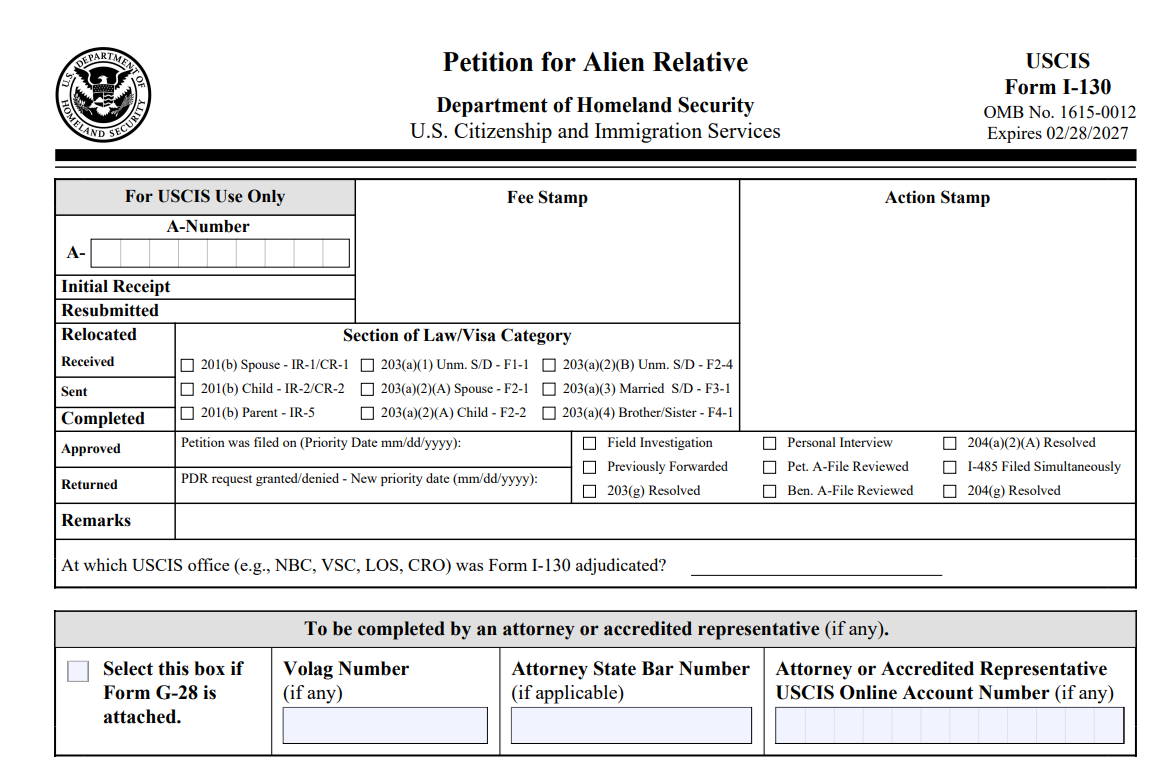
The first part of the online immigrant visa application involves dealing with the United States Citizenship and Immigration Services (USCIS) and filing Form I-130. You also file some other forms along with evidence of the marriage, but basically, you're petitioning for approval of a visa application for your spouse down the road.
How does it work?
You send in the I-130. Once the USCIS receives your Form I-130, you'll receive your priority date, which acts like a ticket number in a queue.
The case gets processed in about four or five months, and then it gets approved. That's the stage at which this fellow happened to contact us. He thought he was pretty much done and that his wife would be here soon. We had to explain to him that there's a lot more work involved at that point.
The NVC is part of the State Department. It's where they process all the visa paperwork before it is actually sent to the embassies.
In the NVC, you have to submit a whole new set of personal and financial documents, and a new application. I know it sounds silly, but you have to remember you're dealing with 2 huge federal agencies. In these cases, you file a form called the DS-260 which is an electronic form that is actually applying for the visa, and you have to submit all this evidence about the individual coming and about the person who's sponsoring them, sort of where the person is going to live when they get here, and a lot of information about the person's criminal background and all those things.
After you submit the DS-260, you also have to submit something called the affidavit of support. We have lots of videos on that, so if you want to learn about the affidavit of support, just search for that. But basically, it's a promise by a U.S. citizen or a green card holder that if the non-citizen comes to the United States, they're going to support them and that the person is not going to become a public charge, they're not going to get benefits.
After you do that, you have to submit the checklist, which contains all the required supporting documents related to the application. For most countries, you submit it by federal express or courier. For certain countries, including Iraq, you submit that electronically, so then via scanning in a bunch of PDFs and sending that all off. Track your case using the official website of the Consular Electronic Application Center.
Typically, the National Visa Center will often send back a checklist. They like to ask for lots of things. We do our very best to cut down on the number of checklists, but they invariably ask for something else or more. In any event, there's some back-and-forth.
Once the case gets approved by the National Visa Center, which takes about 3 or 4 months because they are a little bit behind, then your case gets put in line for an interview.
Depending on how busy the embassy is, this line for the interview can be several months long. Then, you're at a point where you're waiting for your spouse to get their visa appointment. Then, your spouse is going to get an appointment. They're going to bring their passport, all their identity documents. They're going to want to bring copies of everything that has been submitted to the National Visa Center. In some situations, they're going to ask for originals.
But in any event, eventually, the interview will come, and your spouse will go to the embassy. It will be a relatively short interview to make sure that the spouse still wants to come and that you're still married. They might need some background information about how they met.
Then, after that, the foreign national will leave their passport with the office, and about a week or 2 later, they should get it in the mail or via Federal Express. It is not mail; it is just Federal Express or a courier. Or they'll be able to pick it up at the embassy. Then, at that point, the person will have a visa to come.
Applicants who have dealt with both domestic and overseas cases often ask about the I-485 vs. I-130 interview — the key difference is that overseas cases go through consular processing while domestic cases use adjustment of status, meaning the interview format and officer focus can differ.
The last stage before the person actually enters the United States is that you have to go online and pay a fee called the ELIS fee, which is the actual fee for the green card.
These are the steps that are involved after an I-130 is approved. We hope this explains things to people. There is a lot of work to be done after the I-130 has been approved. The I-130, I wouldn't say, is the easy part, but it is certainly the least time-consuming part, and it's an overall long process.
Work with an experienced immigration attorney today to win your case!
The timeline after I-130 approval to the embassy interview can take several months, depending on multiple factors. However, here's a general guideline:
Important Note: The processing times for immigrant visas and the wait for the interview can be affected by factors such as:
For a more specific and accurate timeline in your case, it's recommended to:
Remember, even though the interview wait time can be frustrating, I-130 approval signifies a significant step forward in becoming a lawful permanent resident.
After your I-130 petition is approved, the next steps can involve NVC processing. While some applicants complete the process without legal assistance, an immigration lawyer may help you address complicated cases, document issues, and answer questions about the next stage.
At Hacking Immigration Law, LLC, our immigration attorneys can help you with the challenges that may arise during the spouse immigrant visa process.
An immigration lawyer may be able to help if your case involves previous immigration violations, criminal history, prior visa refusals, or other circumstances that require an individual legal assessment. These issues may affect your eligibility or require additional documentation.
Has the National Visa Center requested more documents or sent a checklist? An attorney can review the request, help identify potential issues, and explain what steps may be appropriate based on your case.
Submitting accurate and complete documents can help you avoid unnecessary delays.
If your spouse's immigrant visa case has been delayed during NVC processing or interview scheduling, an immigration lawyer can help assess the situation. Depending on the circumstances, this may include reviewing available inquiry options or determining whether further legal action is appropriate.
Keep in mind: Not every delay qualifies for expedited processing or requires legal intervention.
Some applicants may face inadmissibility issues that require further legal review or a potential waiver. A lawyer can help you understand whether a waiver may be available and what requirements apply to your specific circumstances.
Eligibility depends on the facts of each case, so legal advice should be tailored to your situation.
Are you confused about what happens after your I-130 is approved? You may have questions about NVC processing, the DS-260, the Affidavit of Support, missing documents, or your spouse's interview.
A consultation with a trusted immigration lawyer can help you understand the next steps, identify potential concerns, and determine whether legal assistance may be appropriate.
Have questions about your spouse's immigrant visa case after I-130 approval? Contact our immigration law office to discuss your situation and learn how we may be able to help.
The time from I-130 approval to the immigrant visa interview varies. The case must go through NVC case creation, fee and document submission, document review, and interview scheduling.
I-130 processing time depends on the petition type, processing office, and case circumstances. USCIS publishes processing time information that applicants can use to check the applicable form and category.
For the latest estimate, check the USCIS processing time.
An I-130 petition doesn’t automatically require an interview in every case. USCIS may request an interview when appropriate.
For an overseas spouse, the immigrant visa interview takes place later in the process at a U.S. embassy or consulate. This is separate from the I-130 petition adjudication. The overseas spouse attends the consular immigrant visa interview as part of the visa application process.
No. I-130 approval alone doesn’t grant an immigrant visa or authorize travel to the United States as a permanent resident. An overseas spouse generally must complete the immigrant visa process and obtain the appropriate visa before immigrating.
The exact travel requirements depend on the case and the visa issued.
An immigration lawyer may assist with document preparation, legal questions, and case-specific issues. The scope of assistance depends on the case and the services agreed upon.
If you are unsure whether your case needs legal help, a consultation can help you identify the questions and potential issues that should be reviewed.
If you are in one of the 75 countries affected by the former immigrant visa pause, the court’s ruling vacating that policy is important for your case. U.S. District Judge Jeannette A. Vargas ruled that the State Department’s 75-country pause was unlawful and exceeded the Secretary of State’s authority. This means the former 75-country pause should not, by itself, prevent your immigrant visa case from moving forward.
However, your case may still face delays because of separate changes to immigrant visa interview processing. If you are waiting for an interview, continue checking your email and the website of the U.S. embassy or consulate handling your case for updates. If you are unsure how the court ruling or current interview delays affect your case, an immigration lawyer can review your situation and explain your options.
Your I-130 approval is an important milestone, but the process is not over yet.
If you have any questions related to citizenship and immigration services, call us at 314-961-8200 or email me at [email protected]. If you liked this video, please subscribe to our YouTube channel, and we'll be sure to update it from time to time. Thanks a lot.