Derivative citizenship allows certain children born abroad to become U.S. citizens automatically through a parent. Under current law, a qualifying child becomes a derived citizen when every condition in section 320 of the Immigration and Nationality Act (INA) exists at the same time before the child’s 18th birthday.
Special rules may apply to certain children of U.S. government employees and military members stationed abroad, while older cases may be governed by earlier laws.
Key Takeaways:
Citizenship claims are highly fact-specific. A missed date, an unclear custody order, an adoption issue, or an incomplete record can change the result. At Hacking Immigration Law, LLC, our citizenship lawyers help families determine which law applies and prepare the evidence needed to document United States citizenship.
Table of Contents
Derivative citizenship is U.S. citizenship that a child automatically receives after birth through a U.S. citizen parent. The child does not file Form N-400 or complete the ordinary naturalization process. Citizenship arises by operation of law when all applicable eligibility requirements are met before age 18.
People sometimes call this process derivative naturalization, but that phrase can be misleading. Under current INA 320, the child does not apply to naturalize. The child automatically acquires citizenship once the final statutory condition is satisfied.
A common example looks like this:
If all requirements for derivative citizenship are met simultaneously, the child may automatically acquire citizenship. The date of citizenship is the date the final requirement was met, not the date U.S. Citizenship and Immigration Services (USCIS) later approved Form N-600.
The Child Citizenship Act of 2000 amended INA 320 and created one main path for children residing in the United States to acquire citizenship automatically after birth. The law took effect on February 27, 2001, and generally requires only one U.S. citizen parent rather than both parents.
The Act applies to a child who was under 18 on February 27, 2001, or who was born later. USCIS explains this as people born on or after February 28, 1983. A person who had already reached eighteen years of age before the effective date must look to the nationality law that was in effect earlier.
This distinction matters because former INA 321 had different requirements. A person's date of birth and the dates when each parent naturalized, custody was established, and permanent residence began may determine which law applies.
Under current INA 320, a person born outside the United States generally becomes a citizen automatically when four conditions exist together before age 18.
A parent who has naturalized should not assume that the child’s green card automatically updates the government’s records. The legal status may have changed by operation of law, but the family should obtain evidence of citizenship.
INA 320 requires that the child reside in the legal and physical custody of a U.S. citizen parent before age 18. Legal custody concerns authority and responsibility for the child. Physical custody means the child’s actual residence with the parent. Evidence must usually come from the relevant period before age 18.
USCIS looks to a court order, a statutory grant of custody, and the law of the relevant jurisdiction. The child’s legal parent named on a birth certificate is often presumed to have legal custody unless other evidence, such as a custody order, shows otherwise.
The USCIS Policy Manual provides guidance for several family situations, including:
A private or informal agreement generally cannot override an existing judicial custody order. It may matter when no order decides custody and the applicable state law recognizes the informal agreement.
Physical custody means the child actually lived with the U.S. citizen parent. Useful records may include:
If custody, divorce, legitimation, or parentage is unclear, speak with a citizenship lawyer before filing. One document can change the analysis.
An adopted child may obtain derivative citizenship through a U.S. citizen adoptive parent if the child satisfies INA 320 and the immigration law’s definition of an adopted child. The result can depend on the adoption category, the child’s age, lawful admission, final adoption decree, residence, and custody.
Some children admitted in qualifying adoption categories receive a Certificate of Citizenship automatically. Others need Form N-600 or must complete additional adoption steps in the United States.
A child born through assisted reproductive technology, or a child in another nontraditional family arrangement, may require a separate parentage analysis. USCIS examines whether the person qualifies as the child’s legal parent under the INA and the applicable law.
A person may not qualify under current INA 320 when:
Having a U.S. citizen parent is not enough by itself. The same is true when only one parent naturalizes in an older case governed by former law. The rules governing the case depend on the law in force when the required events occurred and can affect every step of the entire process.
Here’s a side-by-side comparison between acquired and derived citizenship:
| Feature | Acquired Citizenship | Derived Citizenship |
| Timing of Citizenship | At birth | After birth (automatically upon meeting conditions) |
| General Definition | A child born abroad is a U.S. citizen from birth through one or both parents. | A child born abroad becomes a U.S. citizen after birth when a parent naturalizes, or another qualifying event occurs. |
| Governing Statute | Depends on the statute in effect at the child's date of birth. | Governed primarily by current INA 320 (or historical statute in effect when all conditions were satisfied). |
| Key Determining Factors | - Child’s date of birth
- Whether one or both parents were U.S. citizens - Marital status of parents at birth - Gender of the citizen parent (under historical law) - Parentage, legitimation, and assisted reproductive technology (ART) - Parent’s prior physical presence in the U.S. |
- Citizen parent’s status (e.g., naturalization)
- Child’s age (must be under 18) - Child's legal permanent resident (LPR / green card) status - Child residing in the U.S. in the legal and physical custody of the citizen parent |
| Core Parent Requirement | Defined period of physical presence in the U.S. completed before the child’s birth. | U.S. citizenship (often via naturalization) and legal/physical custody of the child while the child is under 18. |
| Key Evidence Needed | - Parent’s records from prior to the child's birth:
- School transcripts - Employment records - Tax returns - Military service records - U.S. residence documentation |
Records tied to the qualifying post-birth events:
- Parent’s naturalization certificate/date - Child’s Permanent Resident Card (green card) - Legal and physical custody documents - Proof of U.S. residence prior to the child turning 18 |
Turning 18 does not take away citizenship that was already acquired or derived before the deadline. But if the child did not satisfy all applicable conditions by the age deadline, the person generally cannot satisfy the missing INA 320 requirement later and claim automatic citizenship under that section.
A person who became a citizen as a child can file Form N-600 after turning 18. The application documents an existing citizenship status. It does not require the parent to still have custody at the time the application is filed.
The evidence must show that all legal conditions existed earlier. So make sure to preserve school records, tax transcripts, old green cards, custody orders, naturalization certificates, and residential documents.
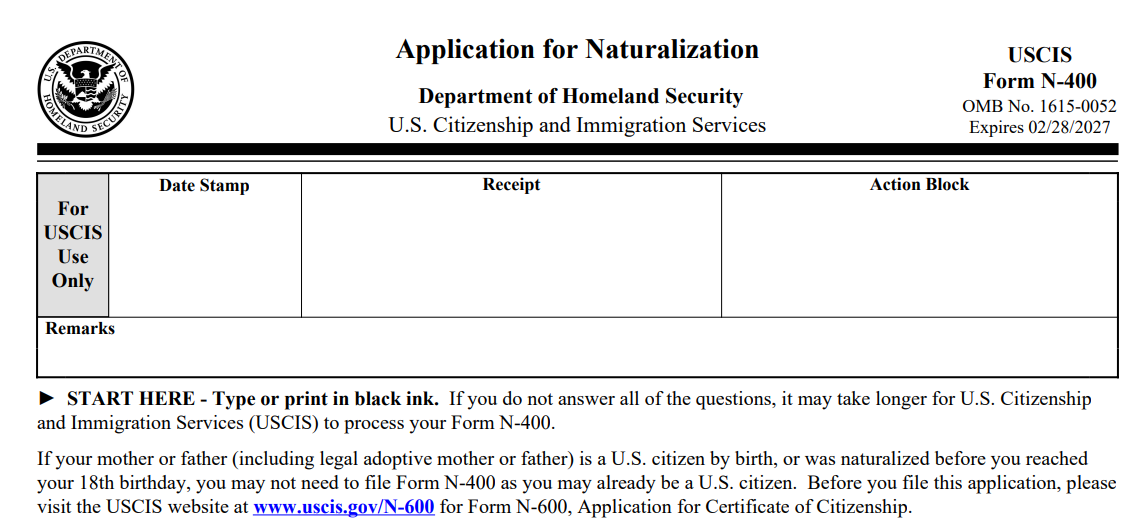
If the person did not derive citizenship, they may need to qualify for naturalization independently, often through Form N-400. That is a different process with separate continuous residence, physical presence, good moral character, English, civics, and oath requirements.
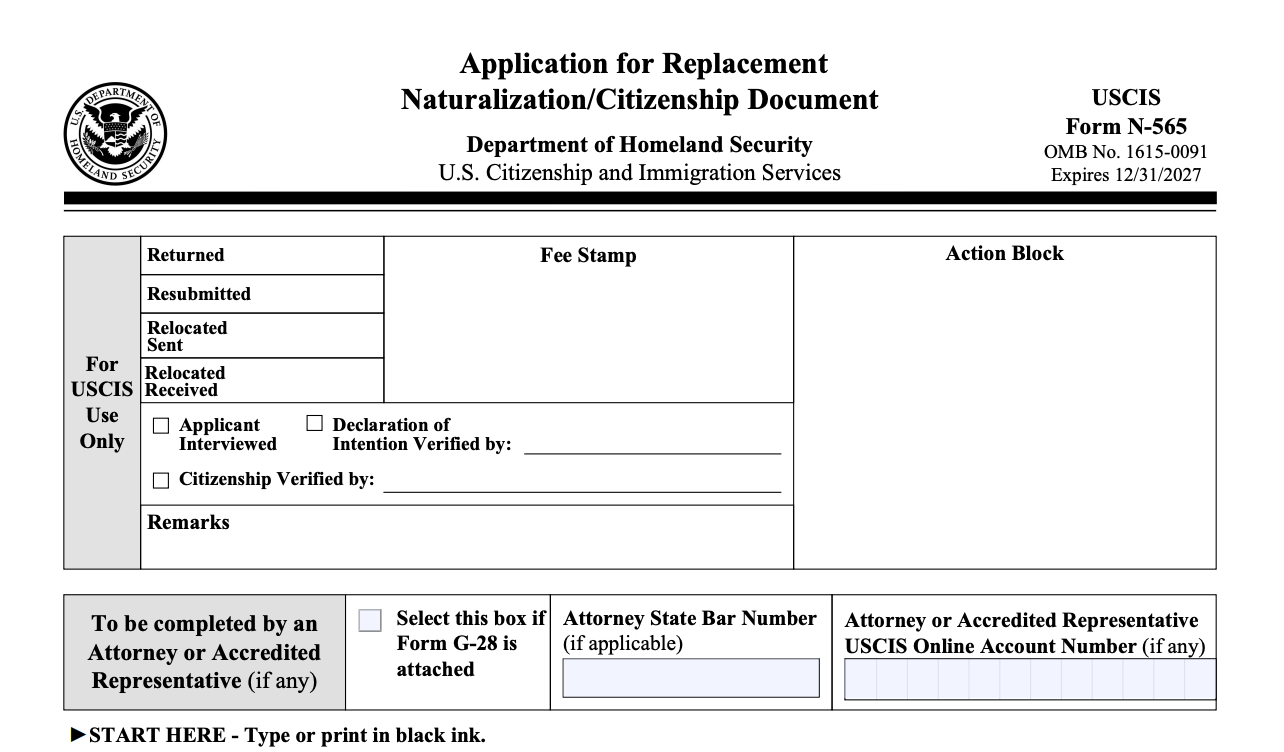
Form N-600 asks USCIS to issue a Certificate of Citizenship to someone who already acquired or derived U.S. citizenship. It does not grant citizenship under INA 320. The applicant must prove the citizenship claim by showing that it is more likely than not that all legal conditions were satisfied.
USCIS allows eligible applicants to file Form N-600 online or by mail, subject to current filing restrictions. A parent or legal guardian can file on behalf of a child under 18. A person who is 18 or older may file on their own behalf.
If USCIS approves the application, it issues a Certificate of Citizenship after any required interview and oath. The certificate does not expire. A valid, unexpired U.S. passport can also serve as evidence of citizenship, but it is issued by the Department of State and is not the same document.
Read our detailed Form N-600 and Certificate of Citizenship guide before filing.
An immigration lawyer can identify the correct law, build a timeline, and match each legal requirement to evidence before a family files Form N-600, N-600K, N-400, or a passport application. That review matters because a filing under the wrong statute may expose gaps rather than resolve them.
At Hacking Immigration Law, LLC, our practical rule is simple: build a date-by-date citizenship timeline before choosing a form. That timeline makes it easier to assess citizenship and helps determine whether USCIS, the Department of State, or the Department of Homeland Security records need attention.
Our immigration lawyers can help you with the following:
Remember, a Certificate of Citizenship can protect a child’s ability to prove citizenship years after the family records that established it become difficult to find.
If you are unsure whether you or your child automatically became a citizen, do not guess.
A child may automatically derive U.S. citizenship when a parent naturalizes, but only if every applicable condition is met before age 18.
No. Form N-600 does not create citizenship. It asks USCIS to confirm that the applicant already acquired or derived citizenship under the law and to issue a Certificate of Citizenship.
Yes. A person who met all legal requirements before age 18 may file Form N-600 as an adult.
Yes. A child adopted by a U.S. citizen may automatically derive citizenship if the adoption and immigration history satisfy the INA definition of “child” and all INA 320 conditions.
Derivative citizenship can arise automatically, but proving it later is not automatic. The four current INA 320 conditions must overlap before the age deadline, and older claims may require a detailed review of former law, court decisions, and historical family records.
Jim Hacking can help determine whether you should file Form N-600 for a Certificate of Citizenship, pursue citizenship for a child abroad, or follow a different U.S. citizenship process. Contact our immigration team to discuss your case.