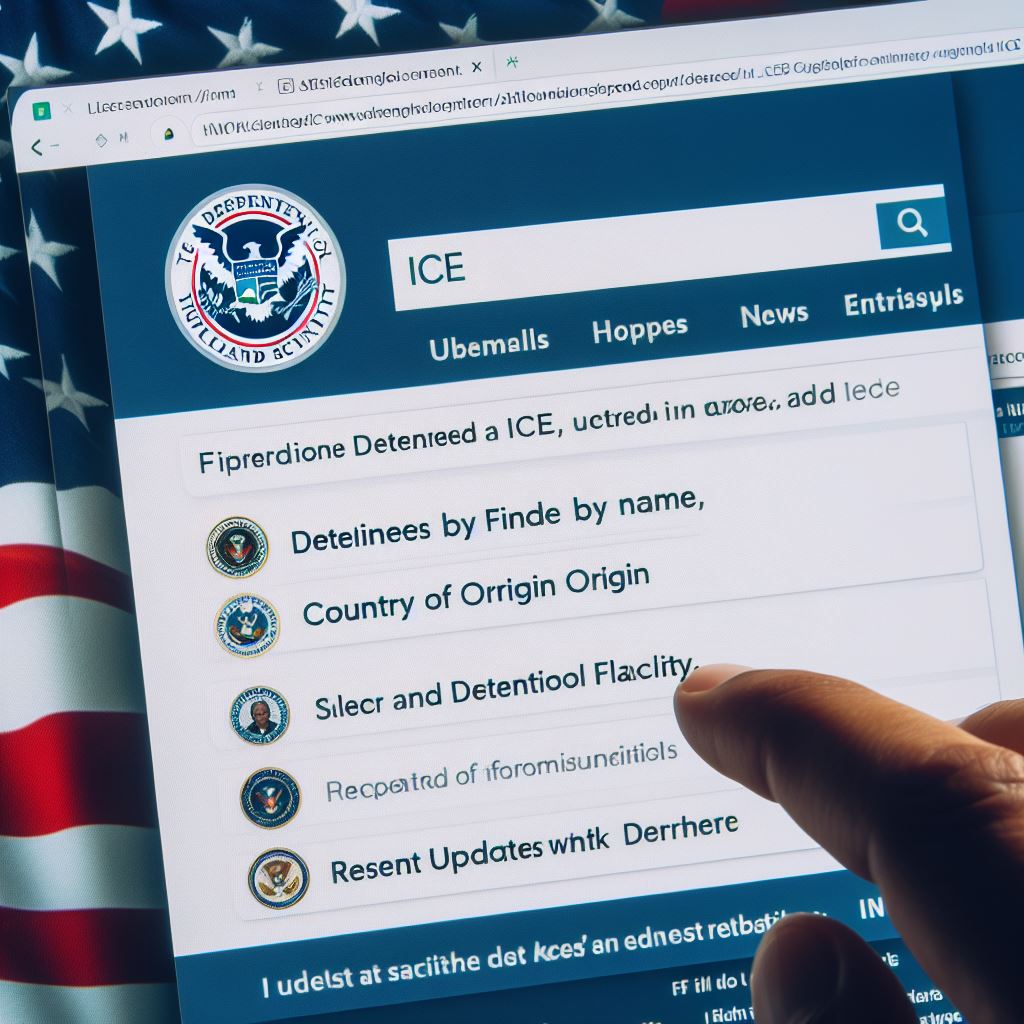
To find out if immigration has someone in custody, use the ICE Detainee Locator, the Online Detainee Locator System (ODLS) provided by U.S. Immigration and Customs Enforcement (ICE), or contact the relevant detention facility directly.
Immigration enforcement has reached an unprecedented scale. As of February 2026, ICE is holding more than 68,000 people in detention, a number that has more than doubled since early 2025, according to data from the Transactional Records Access Clearinghouse (TRAC). With ICE arrests happening at schools, workplaces, and in communities, more families than ever are trying to locate a detained loved one.
Experiencing the detention of a friend or family member by Immigration and Customs Enforcement (ICE) can be a distressing and confusing time. The uncertainty of their whereabouts and the next steps to help them get released can add to the anxiety. Fortunately, ICE provides an online tool called the ICE Detainee Locator System that allows you to search for individuals in ICE custody.
Read on to learn more about the following:
• How to know if immigration has someone in custody
• Tips for locating someone in ICE detention
• Additional resources for assistance
Hire an expert attorney who can fight for your future today!
INDEX
Before diving into the details of the ICE Detainee Locator System, it's essential to understand what immigration detention entails.
Immigration detention refers to holding individuals suspected of immigration violations or pending deportation orders. ICE agents—often part of Homeland Security—can make arrests in various locations, including businesses, homes, and courthouses.
Some common reasons for detention include entering the country illegally, pending deportation orders, or unresolved political asylum cases.
The ICE Detainee Locator System is a powerful tool for searching individuals who are 18 years or older and currently in ICE custody. This system covers all ICE detention facilities across the United States, providing a comprehensive database for locating detainees. It allows family members, legal representatives, and the public to search for individuals currently in ICE custody or who were held in U.S. Customs and Border Protection (CBP) custody for more than 48 hours. Whether you know the person's Alien Registration Number (A-Number) or have their biographic information, the online detainee locator system can help you find them.
Before this system existed, the only way to locate a detained person was to call an ICE Enforcement and Removal Operations (ERO) field office directly. The ODLS now makes that search available 24 hours a day, 7 days a week, and is accessible in Spanish and seven other languages.
Using the ICE Detainee Locator can help ease the anxiety and uncertainty that comes with having a family member or friend in ICE custody. It allows users to be aware of the detainee's status, visitation guidelines, and other important details.
Additionally, the system can serve as a valuable tool for legal representatives, providing them with the necessary information to navigate the complex immigration review process.
Get the legal protection you deserve.
Hire St. Louis Immigration Lawyers
Here's a detailed breakdown of how to locate immigration detainees using the locator system:
Visit the official ICE website and navigate to the ICE Detainee Locator page. The system is accessible to the public and can be used free of charge.
To search for a detainee, you will need to provide specific information. The system offers two search methods:
If you have access to the person's A-Number, an 8 or 9-digit unique identifier assigned to noncitizens, you can enter it along with their country of birth in the designated search bar.
You can find the A-Number on:
• Green cards (Permanent Resident Cards)
• Employment Authorization Documents (work permits)
• Immigration court notices
• Any correspondence from DHS or the Executive Office for Immigration Review (EOIR)
Important: ICE recommends entering the A-Number as exactly nine digits. If the number on the document is only 8 digits, add a leading zero before entering it. Do not include hyphens or spaces.
If you don't have access to the person's A-Number, you can search using:
• First and last name (must be exact)
• Date of birth
• Country of birth
Warning: The system requires an exact name match based on how government workers entered the information. Misspellings, reversed first and last names, or name variations can cause the search to return no results. Try multiple variations, with and without hyphens, with nicknames, or with alternate spellings, before concluding the person is not in the system.
In case your initial search does not yield the desired results, try different variations of the detainee's name or consider adding or removing hyphens. Sometimes, minor discrepancies or misspellings can affect the search results.
When you conduct a search using the ICE Detainee Locator System, the results will indicate whether the person is "In Custody" or "Not in Custody."
Tip: ICE recommends taking a screenshot of any search result immediately. If the person is transferred to a different detention facility, you will want a record of their previous location.
Children under 18 do not appear in the ICE Online Detainee Locator System. This is a firm privacy restriction. The detainee locator does not process searches for anyone under 18, regardless of how the search is conducted.
Here is what you should know if a child has been detained:
• If a child is arrested inside the U.S. with their parent, they may be held together in a family detention center. The adult parent or guardian should appear in the locator, but the child will not.
• If a male parent or guardian is detained, ICE sometimes holds them separately from their family. This is not uncommon and does not mean the family has been deported.
• If an immigrant minor is arrested by local police and transferred to ICE, they may be held in a juvenile detention facility. These do not appear in the locator system.
• Children who arrived unaccompanied may be in the custody of the Office of Refugee Resettlement (ORR) rather than ICE. ORR has a separate system for locating unaccompanied minors.
If none of these work, contact an immigration attorney immediately. The rules around detaining and deporting children are complex, and legal intervention can make a significant difference.
One wrong move could cost you everything—make the right one now.
With ICE detention at record levels and the system expanding faster than its infrastructure can support, the online detainee locator system does not always provide accurate or current information. Here is what to do:
If you cannot locate someone using the online system, call the ICE Enforcement and Removal Operations (ERO) field office that covers the area where the person was arrested.
If the person was arrested near the border or by CBP officers rather than ICE interior agents, they may be in CBP custody rather than ICE custody, especially within the first 48 hours.
If you have any information about where the person might be held, even a city or county, call local immigration detention facilities, county jails, and processing centers in that area directly.
An experienced immigration attorney has tools that the public does not. They can file emergency motions, identify which facilities have recently received transfers, and communicate directly with ICE on your behalf. If someone you care about has been detained, contacting Hacking Immigration Law, LLC is one of the fastest ways to locate them and begin working toward their release.
Understanding the legal rights of detainees and their families is crucial when dealing with immigration issues. The information obtained from the ICE Detainee Locator can be instrumental in ensuring these rights are protected.
Here are some key considerations:
Detainees have the right to legal representation throughout the immigration court process. Having a qualified immigration attorney can greatly impact the outcome of their case. Attorneys, such as those at Hacking Immigration Law, LLC, specialize in immigration matters and can provide expert guidance and representation.
The information obtained from the ICE Detainee Locator can be used as evidence in legal proceedings. This is especially important when preparing arguments before an immigration judge. It’s also important to consult with an attorney to understand how best to utilize this information in support of the detainee's case.
When communicating with ICE or any other immigration authorities, it is essential to be cautious about the information disclosed. Anything said during these interactions can potentially be used against the detainee in immigration proceedings. It is advisable to seek guidance from an attorney before revealing any sensitive information.
While the ICE Detainee Locator System is a valuable tool, it is important to be aware of its potential challenges and limitations.
Here are some factors to consider:
The information provided by the ICE Detainee Locator System is not always real-time. The system is typically updated within 20 minutes to eight hours of a change in a detainee's status. However, delays can occur, and it is essential to verify the information by contacting the relevant facility directly.
The accuracy of search results will depend on the accuracy of the information entered. Minor errors, misspellings, or variations in names can affect the search results. It is advisable to try different spellings or variations if the initial search does not yield the desired outcome.
The ICE Detainee Locator System prioritizes privacy and may not provide information on detainees under 18 years old. In such cases, alternative methods, such as contacting local ICE offices or detention facilities, may be necessary to obtain information.
Detainees can be transferred between detention facilities for various reasons, including security considerations. The system may not always provide real-time information about planned or ongoing transfers. It is advisable to contact the detention facility directly to confirm the detainee's location and any visitation protocols.
In the current enforcement environment, bonds are harder to obtain than in previous years. The Trump administration has pushed toward a 'no release' policy for many detainees. However, a bond is still possible in many cases, and an attorney can file for a bond redetermination hearing before an immigration judge. Hacking Immigration Law, LLC handles these proceedings and can advise on the likelihood of release based on the specific facts of each case.
The right attorney can distinguish between winning and losing—make your move.
Can I use the ICE detainee locator for someone detained by CBP (Customs and Border Protection)?
Yes. The Online Detainee Locator System also covers individuals in Customs and Border Protection (CBP) custody who have been held for more than 48 hours. If someone was recently detained at or near a border, CBP custody applies. After 48 hours, their information should appear in the locator.
What if I search and the person doesn't show up?
A blank result does not mean the person was not detained. They may not yet be in the system, or the name may have been entered differently than you are searching. Try alternate spellings, check with and without hyphens, and contact the ICE ERO field office for the area where they were arrested.
What does 'Not in Custody' mean on the ICE detainee locator?
It can mean one of several things: the person has been released, deported, or transferred in the last 60 days, or the system has simply not updated yet. If you expected the person to be in custody, check back and contact the ICE ERO field office to confirm.
Does the ICE locator show people in all immigration detention facilities?
The system covers ICE and CBP detention facilities nationwide. However, with more than 220 active detention sites in 2026, including newly converted warehouses and local jails, not all locations update in real time. Some people in non-standard facilities may not appear immediately.
Can immigration attorneys find someone faster than the online locator?
Yes. Immigration attorneys have direct communication channels with ICE ERO offices and can file emergency motions that require ICE to provide location information. If you cannot locate someone through the public system, contacting an attorney at Hacking Immigration Law, LLC is the next fastest step.
What should I do once I locate the detained person?
Contact the detention facility directly to confirm their status, understand visitation rules, and set up phone communication. Simultaneously, contact an immigration attorney to assess options for bond, emergency relief, or removal defense. Acting fast matters as conditions and options can change quickly.

Navigating immigration enforcement can be challenging without proper legal guidance. Immigration attorneys will play a crucial role in assisting individuals and families dealing with ICE detention and immigration matters. At Hacking Immigration Law, LLC, our St. Louis attorneys specialize in providing comprehensive legal representation and guidance to clients facing immigration challenges.
Our attorneys are well-versed in the intricacies of the immigration court process and can help detainees and their families understand their rights, navigate the system, and advocate for the best possible outcome. With our expertise and dedication, we strive to provide compassionate and effective legal support to those in need.
If you're still unsure how to know if immigration has someone in custody, or need help navigating the legal complexities, don’t hesitate to reach out.