Yes, you absolutely need a citizenship lawyer on your side to avoid costly mistakes, stressful delays, or unexpected denials. Naturalization is one of the most important milestones of your life, and having an expert guide you through the paperwork, interviews, and legal nuances is the smartest way to protect your future.
Understanding the U.S. immigration rules can feel like decoding a foreign language. The forms and requirements can leave you scratching your head. You might be wondering: Do I really need a lawyer to apply for U.S. citizenship?
The stakes are high. One typo on your N-400 form or a missing document in your application can trigger delays – or worse, denials. Criminal records, mismatched dates, or incomplete business plans can trip you up. Without expert guidance, even simple steps can be confusing. Every deadline feels urgent, and the fear of falling behind can turn excitement into stress.
An experienced immigration lawyer turns that maze into a roadmap, as they spot red flags you didn’t know existed, fix errors before you file Form N-400, and coach you so the naturalization interview with a USCIS officer feels like a conversation instead of an interrogation.
Key Takeaways:
• To naturalize, you must meet eligibility (age, LPR years, residence) and pass a civics & English test.
• An immigration attorney can help you spot complications (like past arrests) and ensure your N-400 form is flawless.
• Citizenship is too important to leave to chance. Becoming a U.S. citizen affects your future, your family’s security, and your ability to travel, vote, and work freely. Investing in a lawyer is ultimately investing in your peace of mind and long-term stability.
Table of Contents
In FY2024, 818,500 individuals became U.S. citizens through USCIS naturalization ceremonies held domestically and internationally. It may look simple on the surface, but becoming a U.S. citizen through naturalization involves several steps.
Here’s what you need to know:
• Lawful permanent resident (LPR) for 5 years (or 3 if married to a U.S. citizen)
• 18 or older
• Have lived in the U.S. continuously. In practice, this means that no single trip abroad has been longer than a year, and one must have been physically present here for at least ~30 months out of the past 5 years.
• Need to show good moral character (no major felonies)
• Allegiance to the U.S. Constitution
• Basic English proficiency. (Exemptions exist – e.g., long-time residents or those with disabilities may get English/civics waivers.)
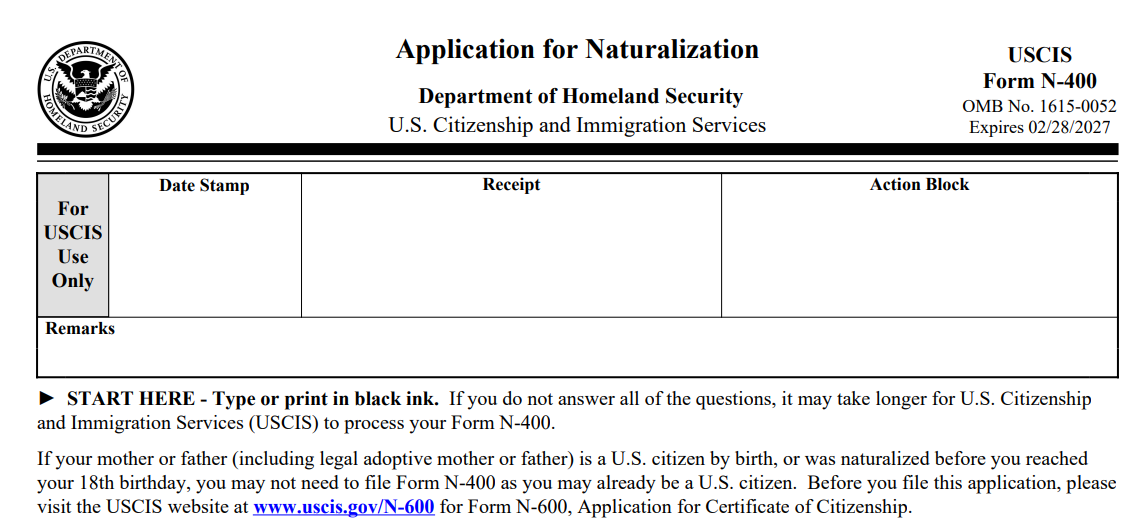
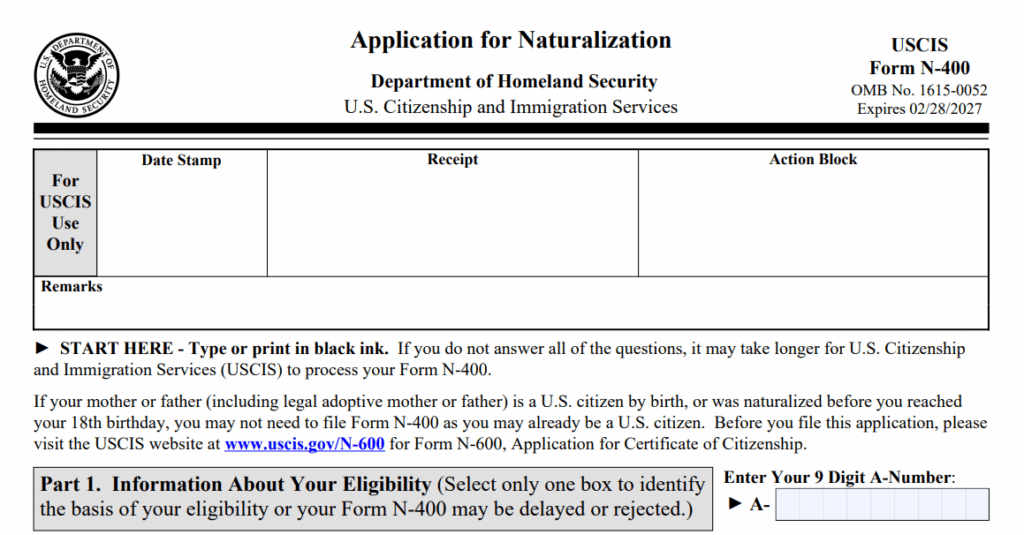
This is the lengthy application for naturalization. You’ll report your personal history: addresses, employment, travel, and any criminal or immigration issues.
The USCIS provides instructions, but be warned: the form is detailed and easy to fill out incorrectly. For example, omitting a prior arrest or not calculating residence correctly can trigger requests for evidence or delays.
After filing, USCIS will schedule a citizenship interview. A USCIS officer will quiz you on everything in your N-400 (in English) and test your English reading/writing and U.S. civics knowledge.
Note: You get two chances to pass the test if needed. If you fail, you can reapply at a later time. Study materials and practice questions are available from USCIS.
If all goes well at the interview (and any background checks), USCIS will schedule your Oath Ceremony. Congratulations, you’re a U.S. citizen!
Avoid costly delays and denials by starting your journey with the right legal partner.
To give you a clearer picture, here’s a quick rundown of the naturalization:
• Confirm Eligibility. Have you been a green card holder for 3 or 5 years? Check your timeline. Do you meet the continuous residence and physical presence requirements?
• Study & Prepare. Gather study materials for the English & civics tests. Practice interviews (some attorneys offer practice sessions).
• Complete Forms. Fill out USCIS Form N-400 with all details of your life. Attach two photos, a copy of your green card (front/back), and the filing fee. (Fee waivers exist for low-income applicants.)
• Submit & Biometric. Mail your package to USCIS or file it online. USCIS will send you a receipt and schedule a biometric appointment (fingerprinting).
• Interview. Go to your USCIS field office on the appointment date. Bring your original documents. You’ll be under oath, answer questions about your application, and take the English/civics tests.
• Decision. If approved, you’ll get a notice for the Oath Ceremony. Even if there are issues, USCIS will explain what’s needed (often a request for evidence or a letter).
• Oath Ceremony. Attend the ceremony, pledge allegiance, and receive your Certificate of Naturalization. Now you’re a U.S. citizen!
A lawyer becomes invaluable when your case is complicated or high-stakes. The kinds of problems that trip up applicants are exactly the things an experienced immigration lawyer sees every day and fixes before they become disasters.
Scenarios in which you will highly need an immigration lawyer include:
Past arrests or convictions can hinder the determination of good moral character or create barriers to naturalization. Not all arrests are fatal, but how you disclose and contextualize them matters.
An attorney reviews your criminal records, explains which offenses are disqualifying, determines whether any convictions are eligible for set-asides or pardons, and crafts mitigating explanations or supporting evidence. They advise whether to delay filing or seek criminal relief first.
Past immigration violations (overstays, prior deportation/removal orders, misrepresentations) can create legal bars or complicated eligibility questions.
Attorneys analyze prior immigration records, identify bars to naturalization, and recommend remedies (motions, waivers, or litigation if necessary).
One wrong date, omitted trip, or inconsistent answer on Form N-400 can lead to Requests for Evidence (RFEs), delays, or denials.
A lawyer does a line-by-line review of your N-400 and supporting documents, flags inconsistencies, cross-checks travel and employment histories, and assembles evidence (tax returns, marriage/divorce certificates, arrest records) so your file is complete and credible.
The naturalization interview can be nerve-wracking, and admitting the wrong information (or simply freezing up) can harm your chances.
Attorneys run mock interviews, quiz you on civics questions, drill responses to personal history questions, and coach you on handling sensitive topics (e.g., unpaid taxes or prior arrests).
If USCIS issues an RFE or denies your application, the stakes suddenly feel much higher. Appeals or federal litigation may be the only route to rectify an agency error or unreasonable delay.
Good immigration attorneys respond to RFEs with tailored evidence, file appeals or motions when appropriate, and in extreme cases, bring lawsuits to compel USCIS action.
Applicants often have decades of records scattered across countries and systems — passports, arrest reports, tax returns, and marriage/divorce documents. Gathering and formatting those documents for USCIS is tedious and prone to errors.
Your attorney creates a clear evidence packet and index that satisfies USCIS expectations, requests fee waivers when eligible, and makes sure every document is translated and certified properly.
The process is emotionally heavy. Fear and uncertainty lead to mistakes (rushing forms, missing deadlines, or withholding necessary info).
Beyond paperwork, lawyers provide peace of mind: a single point of contact, realistic timelines, and advocacy in the event of anything unexpected. They can be your hands-on advocates who'll guide you through every step of the citizenship process.
Hire a St. Louis Citizenship Lawyer
Here are the immigration services our citizenship lawyers offer that map directly to the risks above:
• Citizenship eligibility review & strategy session. Our immigration lawyer evaluates the timing of your N-400, your continuous residence, and any potential bars to naturalization.
• N-400 preparation & filing. Complete drafting, review, and submission of Form N-400 and supporting documents to reduce RFEs and errors.
• Interview coaching & representation at USCIS interviews. Mock interviews and options to have counsel present for difficult interviews.
• Responses to RFEs and denials; appeals & litigation. We prepare persuasive evidence, file appeals, and, when needed, take cases to court to compel agency action.
• Deportation-defense coordination. For applicants at risk of removal, we integrate strategies to protect immigration status while pursuing citizenship when appropriate.
• Document organization and translation services. We assemble indexes, certified translations, and properly authenticated foreign records so that USCIS can review your file without delay.
Getting legal assistance costs money. However, compare that to the cost of a denied application ($725 fee), the months lost, and the potential need for reapplication. If you have any doubt at all, consulting a qualified immigration attorney is a wise insurance policy.
Do I need a lawyer to apply for citizenship?
Yes, even if you think your case is simple. Consulting a lawyer is a smart investment. Immigration lawyers reduce the chance of mistakes, handle tricky legal issues (criminal or immigration violations), prepare you for the questions of the immigration officials, and actively defend you if USCIS pushes back. They can turn a nerve-wracking process into a manageable, winnable one.
What if I have a criminal conviction?
Some crimes permanently bar you from naturalizing. Lesser offenses may require waiting (e.g., 5 years after a conviction). An attorney can clarify whether you still qualify or if a waiver is necessary.
What is the “good moral character” requirement?
This means you must have generally obeyed the law for the required period (typically 3 to 5 years). USCIS may review your entire history, including tax records, debts, and even minor offenses.
What happens at the citizenship interview?
A USCIS officer will go over your N-400 under oath and test your English and civics skills. You must answer consistently with your application. Study well.
While you can DIY much of the paperwork, an immigration attorney can save time and headaches. Lawyers provide legal counsel on eligibility, help prepare USCIS forms, practice civics interviews with you, and check that all evidence (criminal history, tax records, etc.) is in order.
For help at any stage, consider consulting our expert team at Hacking Immigration Law, LLC.