A Notice to Appear (NTA) is an official document issued by U.S. immigration authorities ordering an individual to appear at an immigration court hearing. Learn what a Notice to Appear immigration policy is and what to do when you receive one.
When you open your mail and see a Notice to Appear (NTA) from immigration court, you immediately wonder, “Am I about to be deported? ” That fear is common.
The Notice to Appear is one of the most serious documents you can receive in the U.S. immigration system. According to a USCIS end‑of‑year report, since January 20, 2025, U.S. Citizenship and Immigration Services has issued approximately 196,600 Notices to Appear, placing individuals into removal proceedings.
But here’s the part most people don’t realize: getting an NTA doesn’t automatically mean you’ll be removed from the country. It does mean you have to take action, fast, and that understanding what the notice actually says can make all the difference in your case outcome.
Key Takeaways:
• A Notice to Appear (NTA) is a formal way of starting removal or deportation proceedings against you.
• Ignoring an NTA is the worst thing to do. It leads to an automatic removal order.
• Legal representation is your best defense, and firms like Hacking Immigration Law, LLC, help immigrants fight removal.
Stop stressing over your Notice to Appear. Learn how to protect yourself.
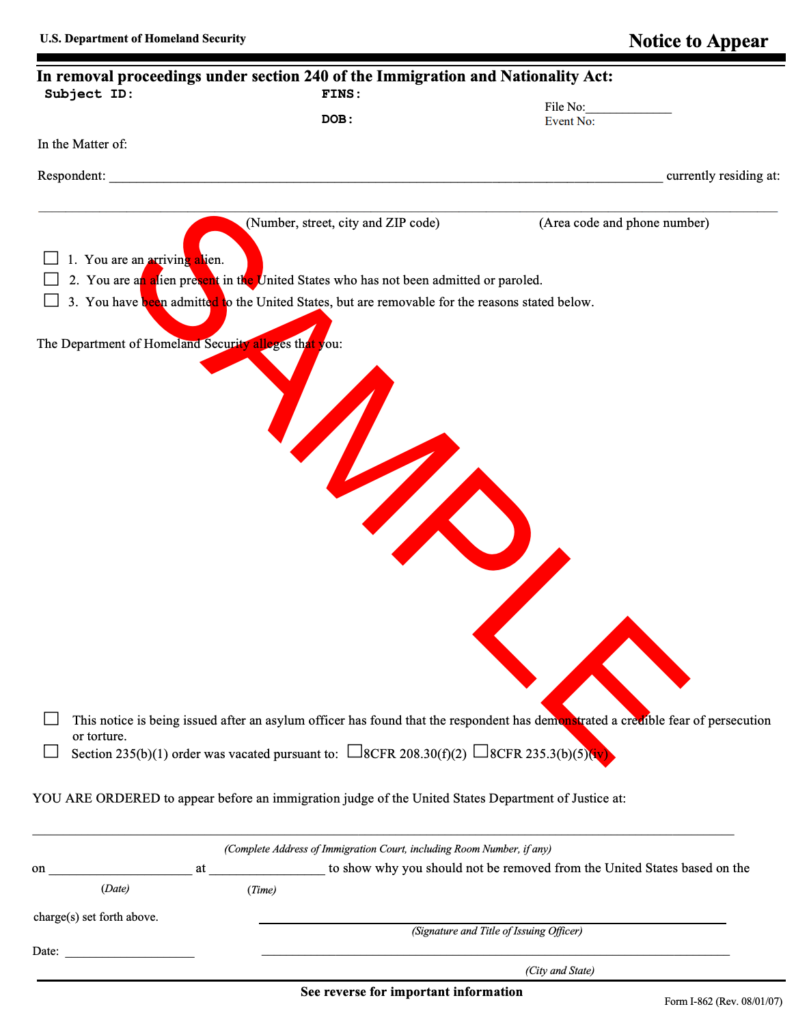
A Notice to Appear is a document the Department of Homeland Security (DHS) issues to initiate removal proceedings in immigration court. Think of it as the government saying, “We’re charging you with violating immigration law, and you must show up in court to respond.” In other words, it’s the formal charging document for your case.
The NTA includes:
• Your personal information
• The date, time, and location of your hearing
• The charges or reasons for potential removal
• Your right to a hearing before a judge
Here’s something important:
If your NTA doesn’t have a time and date for the hearing, you’ll get a follow-up notice later from the court. So don’t assume “missing details” means the notice isn’t real; it absolutely is.
Getting an NTA doesn’t immediately take away your work permit, DACA status, TPS status, or pending case. But it can affect how your future applications are processed.
Here’s what it typically means:
This is a formal court process. Your immigration history will be reviewed, and a judge will decide if you can stay in the country. This applies not only to long-term residents but also to arriving aliens who may be newly detained or in removal proceedings immediately after entry.
Many people win cases by applying for:
• Cancellation of removal
• Adjustment of status
• Asylum or withholding of removal
• Prosecutorial discretion
• Termination of legal proceedings
• Waivers
Your eligibility depends on your individual case, not just the allegations in the NTA.
Many people assume they’re out of options because they entered without inspection or overstayed a visa. That’s not how immigration law works. There are dozens of potential pathways, and removal proceedings often allow you to apply for relief you couldn’t file before. This is true even in cases where the government alleges involvement in certain criminal cases.
Protect yourself from deportation. Get trusted immigration advice today.
As soon as you receive an NTA, your case shifts into the immigration court system. That means your file leaves USCIS (if it was handled by USCIS before) and goes to the Executive Office for Immigration Review (EOIR).
Here’s what happens next:
This is your first appearance in court. It’s usually short, and you won’t be presenting your full case yet. Instead, you’ll confirm:
• Your name and address
• Whether you understand the charges
• Whether you admit or deny the allegations
• What relief you’ll be seeking (asylum, cancellation of removal, adjustment of status, etc.)
You can learn more about this process from organizations like ASAP and ILRC, which specialize in removal defense education.
This is where you present your evidence, testimony, and legal arguments. It’s more formal and can feel like a trial, because in many ways, it is.
The judge may:
• Grant relief (you win your case)
• Order removal
• Allow voluntary departure
• Continue the case for more evidence
What you should NOT do:
Skip your hearing. If you don’t show up, you’ll almost always receive a deportation order in absentia, which is extremely difficult to undo.
If you’re facing deportation, a deportation defense lawyer can help. They can guide you through the legal process and explore how to prevent removal. Having an experienced attorney can surely help protect your rights.
Responding isn’t optional. You must act. And the steps are more straightforward than most people realize.
Look for:
• Your hearing date
• The charges against you
• Any mistakes in your personal information
Even small errors matter, and a skilled attorney may challenge the notice if it’s defective.
This is huge. Immigration courts do not accept address changes filed with USCIS. You must use Form EOIR-33.
If the court sends a hearing notice to your old address, and you miss the hearing, you’re still ordered removed.
You should reach out to an attorney as soon as you receive the NTA, ideally within a few days. Immigration court moves more slowly than USCIS, but you still need time to prepare.
A good lawyer will help you:
• Review the NTA for legal defects
• Decide whether to admit or deny allegations
• Identify the best path to avoid deportation
• Prepare evidence
• Represent you in hearings
• Request prosecutorial discretion when appropriate
• Communicate with the court and DHS on your behalf
Hacking Immigration Law, LLC defends immigrants nationwide and can help you figure out your options.
Put the date in your calendar, set reminders, tell your employer, or do whatever you need to do. Because the moment you don’t show, the judge can, and usually will, order removal.
According to the Center for Immigration Studies, in the first three quarters of FY 2025, immigration judges issued more than 340,000 removal orders in cases that began with an NTA. Of those, about 63.5% (216,000+) were in absentia orders, meaning the respondent failed to appear for their hearing.
This might include:
• Marriage or birth certificates
• Tax records
• Police clearances
• Medical or psychological evaluations
• Proof of hardship to U.S. citizen relatives
And yes, you can absolutely fight your case even if the government accuses you of overstaying, unlawful entry, or certain criminal violations. Your attorney will help identify the best defenses.
Can I be deported just for receiving an NTA?
No. You’re not automatically removed. You have the right to fight your case.
Do I need a lawyer?
Immigration court is complex, and having an attorney dramatically increases your chances of success.
What if I miss my hearing?
You’ll likely be ordered removed in your absence.
Can an NTA be dismissed?
Sometimes. If it’s defective or DHS agrees to prosecutorial discretion, your attorney may request termination.
Receiving a Notice to Appear can feel scary, but it doesn’t mean you will automatically be deported. An NTA is the start of a legal process, not the end of your future in the U.S. Many people fight their cases successfully or even have them dismissed. The key is to take the notice seriously, understand it, and act quickly to protect your rights. With the right preparation, you can navigate the system confidently and improve your chances of a good outcome.
If you or a loved one has an NTA, don’t wait or try to handle it alone. Immigration law is complex, and professional help makes a huge difference. Hacking Immigration Law, LLC has helped thousands of immigrants understand their options, challenge allegations, and fight to stay in the U.S. Getting legal support early gives you clarity, strategy, and the strongest possible defense.