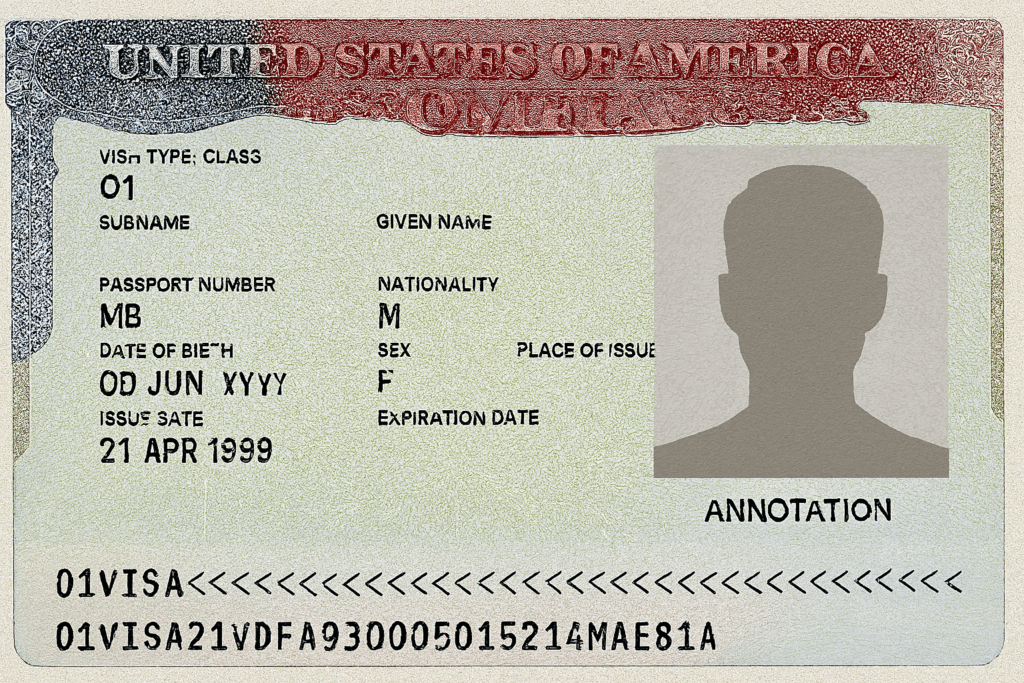
Yes, an O1 visa is transferable, but it requires a new petition filing by the new employer. You cannot simply switch jobs without this process. This ensures your immigration status remains valid while working in the U.S. under a new sponsor.
The O1 visa, a special type of visa for people with outstanding abilities, can indeed be transferred. However, it's not a simple swap; your new U.S. employer or agent needs to file a new application for you.
If you're dealing with U.S. immigration, understanding how to transfer this visa is very important to keep your legal status and continue your important work. Many talented foreign nationals find it overwhelming to change employers while on an O1 visa because of the exact rules and possible problems.
This guide will make the transfer process clear, so you can easily move your extraordinary career forward without putting your immigration status at risk.
Key Takeaways:
• O1 visas are transferable but require a new petition from your new employer.
• Filing early and having very detailed documents are vital for a smooth transfer and to keep your visa status valid.
• Maintaining a valid status is crucial throughout the transfer process to avoid complications.
• Experienced immigration attorneys like those at Hacking Immigration Law, LLC, can simplify the complex transfer procedures.
Don't let the complexities of O-1 visa transfers stand in the way of your career progression.
INDEX
The O1 visa is a U.S. nonimmigrant visa for individuals with:
• Extraordinary ability in these fields - arts, sciences, business, education, or athletics, OR
• Extraordinary achievement in the television industry or motion picture.
• O1A: Extraordinary ability in sciences, education, business, or athletics.
• O1B: Extraordinary achievement in the arts, motion picture, or television industry.
Applicants must have a U.S. employer or agent sponsor them by filing the petition with USCIS.
Yes, O1 visas are transferable, but this isn’t an automatic process. It requires:
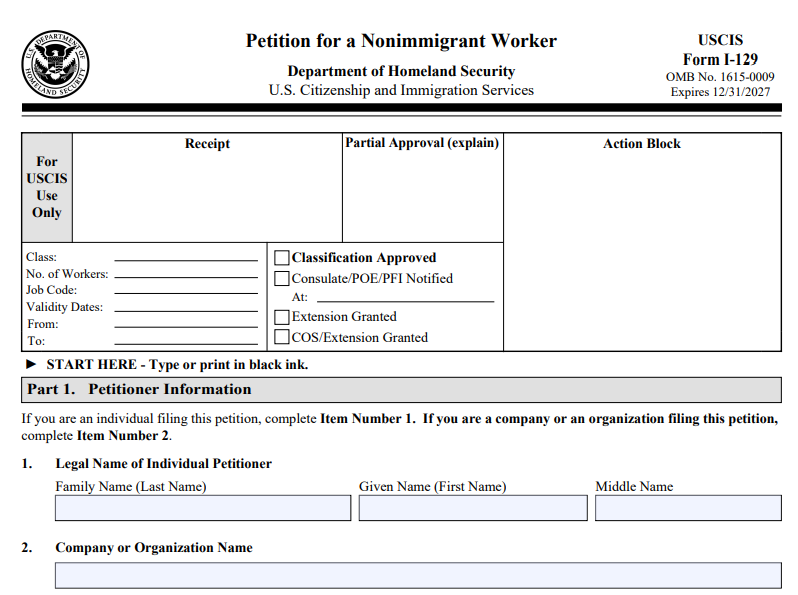
• A new Form I-129 petition filed by your new employer with U.S. Citizenship and Immigration Services (USCIS).
• Proof that you remain in a valid O1 status during the transfer.
Discuss your specific situation and get the expert guidance you need.
Hire St. Louis Immigration Lawyers
The O1 transfer follows a clear sequence of actions involving the new employer (or agent), the beneficiary (you), and sometimes third-party representatives (peer groups, unions).
Here’s a step-by-step breakdown and what each step requires.
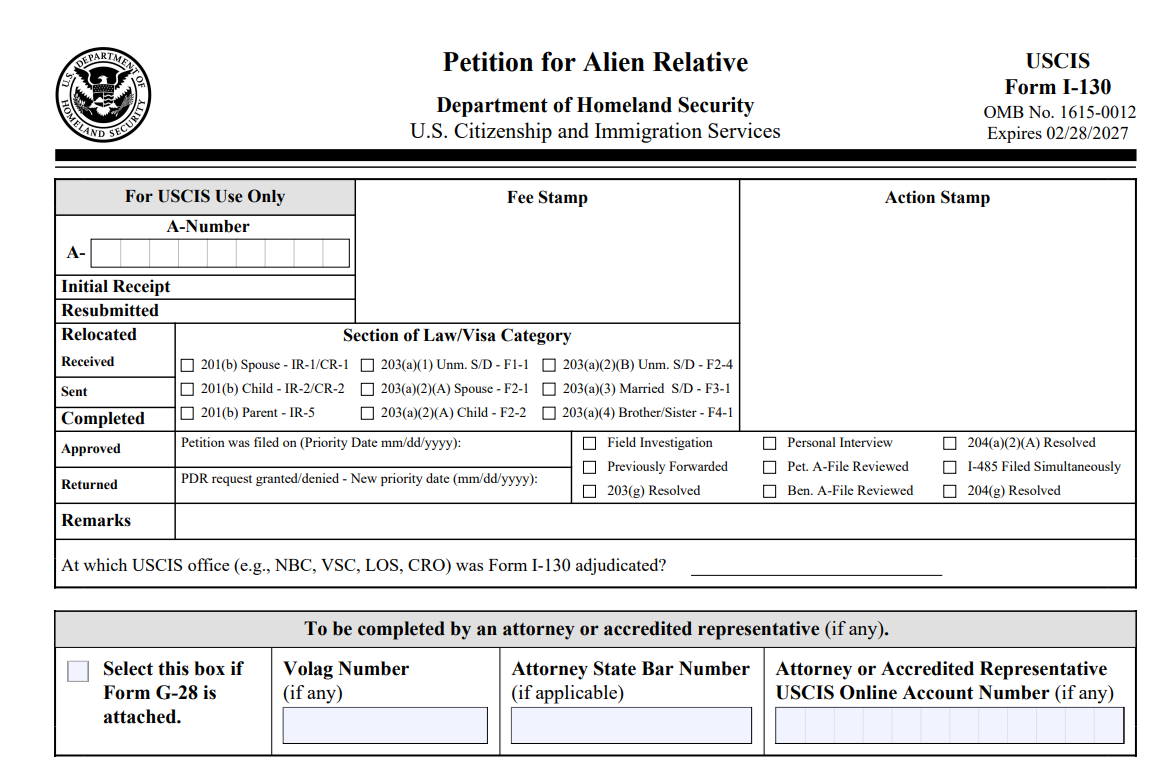
The new employer or U.S. agent must prepare and submit a new Form I-129 on your behalf.
Image Source: USCIS
The petition must clearly state:
• Job title, duties, and the period of employment.
• The legal basis for O1 classification (O1A or O1B).
• The petitioner’s contact and business information.
Include the cover letter that ties your credentials to the regulatory standards for O1 classification.
• The petition should include strong supporting documents or evidence demonstrating that you meet O1 criteria (see “Required Documentation” below).
• Evidence should be organized, labeled, and cross-referenced to the specific petition claims.
• Provide a narrative statement (or legal brief) explaining how the evidence satisfies USCIS criteria.
For a new employment transfer, the new employer must file a fresh I-129. Take note that an amended or supplemented form from the prior employer is not sufficient.
The new petition may be filed as:
• Regular processing (USCIS processes in the normal queue), or
• Premium processing (USCIS guarantees a decision/response in 15 calendar days for an extra fee).
Important: If you are currently in a valid O1 status, you are generally eligible to begin working for the new employer once the new I-129 is properly filed, not necessarily when it is approved. Keep a copy of the filing receipt / I-797C notice as proof of filing.
Include all relevant documents, for example:
• Written advisory opinion from an expert in the field, appropriate peer group, or labor organization.
• Contract or offer letter from the new employer specifying duties, dates, and compensation.
• Detailed itinerary describing where and when services will be performed (especially important for multiple work sites or performances).
• Copies of prior O1 approvals, passport biographical pages, current I-94 (if applicable), and previous pay stubs or employment verification to prove ongoing status.
• Filing early is best. Aim to file at least 45 days before your planned start date to accommodate processing and any RFEs.
Premium processing shortens USCIS response time to 15 calendar days (extra fee applies).
Keep good records of mailing and submission (tracking numbers, receipts, and the I-797C receipt notice). These are important if the beneficiary needs to show the petition was filed.
☐ New Form I-129 completed and signed by new employer/agent
☐ Cover letter linking evidence to O1 criteria
☐ Advisory opinion from peer group or union
☐ Contract/offer letter and compensation details
☐ Detailed work itinerary (dates and locations)
☐ Evidence packet meeting O1 criteria (see below)
☐ Copy of beneficiary’s passport, I-94 (if in U.S.), and prior approval notices
☐ Premium processing request (optional) and fee (if desired)
☐ Retain I-797C receipt and proof of delivery
Applicants typically must meet at least three of the eight USCIS criteria. Below are each criterion with practical examples of acceptable evidence:
1. Nationally or internationally recognized awards
• Examples: Major awards, medals, or prizes with a documented selection process.
2. Memberships that require outstanding achievements
• Evidence: Membership letters that explicitly state membership is selective and based on achievement.
3. Published material about you in either major media or professional journals
• Evidence: Copies of articles, press features, or reviews that primarily discuss your work.
4. Participation as a judge of others’ work
• Evidence: Invitations, event programs, or formal letters showing you evaluated peers’ work.
5. Original contributions of major significance
• Evidence: Patents, documented industry adoption of your work, citations showing influence.
6. Authorship of scholarly articles
• Evidence: Copies of journal articles, conference proceedings, or books with publisher info.
7. Employment in an essential or critical capacity for distinguished organizations
• Evidence: Employment verification letters describing role, impact, and company reputation.
8. High salary or remuneration compared to others in the field
• Evidence: Pay stubs, contracts, or industry salary surveys demonstrating above-market compensation.
• Use a table of contents and an evidence index that maps each exhibit to a specific USCIS criterion.
• Number exhibits and use exhibit labels (Exhibit A, B, C…).
• Provide translations for any non-English documents and attach certified translations.
The statistical data from FY 2024 shows that the O1 petition approval rate was 94%, the highest among employment-based temporary visas. This highlights the importance of a well-prepared application. Hacking Immigration Law, LLC can help you compile this evidence and navigate the filing process.
Regular processing: Typically 2–4 months, depending on the USCIS service center and workload.
Premium processing: USCIS promises an initial response within 15 calendar days for an additional fee (note: amount may change — use current USCIS fee schedule).
Recommended filing lead time: At least 45 days before the intended start date.
Other costs to expect:
• Attorney fees (varies by firm and complexity)
• Document translation and notarization fees
• Costs for obtaining advisory opinions or expert letters
• Premium processing fee (if elected)
You will receive an I-797C receipt notice confirming USCIS received the petition.
Image Source: USCIS
USCIS may:
• Approve the petition,
• Issue an RFE asking for more documentation, or
• Deny the petition.
If an RFE arrives, respond promptly with organized, persuasive evidence, as delays reduce the chance of approval.
In case of denial, consult counsel about filing a motion to reopen/reconsider or pursuing other options.
• Don’t assume automatic portability. The new I-129 filing is mandatory for a legitimate transfer.
• Avoid gaps in status. Make sure your current O1 status is valid at the time you rely on the portability rule.
• Prepare a strong advisory opinion early. Obtaining a timely, well-qualified peer-group letter often takes time.
• Label and explain evidence. USCIS adjudicators respond better to organized, clearly explained submissions.
• Expect RFEs for complex cases. Plan for a possible RFE and gather supplementary evidence in advance where possible.
The O1 transfer process can be technical and detail-heavy. Immigration attorneys turn the complexity into a clear plan and reduce the chances of mistakes that lead to delays or denials.
Here’s how we typically help:
Case assessment & strategy
• Evaluate whether you currently meet O1 standards and identify any gaps related to your non-immigrant status and overall eligibility.
• Recommend the strongest legal basis (O1A vs O1B) and a filing strategy tailored to your career and the new role, and advise whether you should pursue an amended petition or a brand-new filing.
Evidence gathering & organization
• Advise which pieces of evidence will best satisfy USCIS criteria (including items published in major trade publications) and which are redundant.
• Create an evidence index and exhibit list so reviewers can easily match documents to claims. This improves clarity for adjudicators and supports employment authorization requests when needed.
Drafting persuasive filings
• Prepare the petition cover letter / legal brief that explains how your evidence meets each O1 criterion.
• Draft or review employer contracts, itineraries, and advisory opinion requests so they meet USCIS expectations and clearly show whether you will work for multiple employers or a single petitioner/agent.
Managing advisory opinions and expert letters
• Identify appropriate peer groups or experts and draft request templates that make it easier for them to provide useful, credible letters.
• Ensure advisory opinions address the issues USCIS cares about.
Filing, timing & portability advice
• File Form I-129 correctly and on time, advise when you can lawfully begin work for the new employer (portability rules), and recommend whether premium processing makes sense for your situation.
Responding to RFEs and denials
• Quickly and effectively prepare RFE responses with new or better-presented evidence.
• If denied, analyze options (motion to reopen/reconsider, appeal, or refiling) and recommend the best next steps for the visa holder.
Employer/agent coordination
• Help the employer draft job descriptions and contracts that support the O1 claim.
• Explain employer responsibilities and compliance obligations to avoid future issues and to preserve the beneficiary’s valid non-immigrant status.
Post-approval compliance & extensions
• Advise on maintaining status, filing amendments for material changes, and planning timely extensions or future petitions.
Risk mitigation & peace of mind
• Spot common pitfalls (poorly organized evidence, weak advisory opinions, gaps in status) and fix them before filing.
• Provide clear timelines, realistic expectations, and direct communication with USCIS when needed.
Working with Hacking Immigration Law, LLC can streamline the process, reduce surprises, and increase the probability of a favorable outcome.
The O1 visa gives individuals with extraordinary ability the chance to work in the U.S. while enjoying flexibility through transferability.
• The process requires a new petition and careful documentation.
• Maintaining a valid legal status is critical.
• Success is highly achievable with expert legal assistance.
By partnering with experienced attorneys like Hacking Immigration Law, LLC, you can secure a smoother transition and focus on your professional growth in the U.S.