Here's everything you need to know about the validity of the O1 visa, whether you're an employer or a worker.
The O1 visa is a nonimmigrant visa offered to individuals with extraordinary ability in athletics, arts, sciences, business, education, and other fields. People with an extraordinary achievement in the motion picture and television industry are also eligible for this visa.
But the real question is: how long is an O1 visa valid?
This guide details the validity period, extensions, and what to do in case of employer changes under federal regulations.
Key Takeaways:
• The O1 visa is initially valid for up to three years, with up to one year of extensions.
• The validity period begins on the start date of the original petition and can end after the project completion or its set expiration date.
• Extension of stay needs timely filings, updated supporting documents, and compliance with regulations.
• Visa holders must keep a valid nonimmigrant status throughout their O1 application.
• The O1 visa supports dual intent, making it a viable path to pursue permanent residency.
Find every piece of information you need about immigration here.
Table of Contents
You need to know who qualifies for this visa before getting into the specifics. The O1 visa is issued to a nonimmigrant worker who demonstrates:
• A record of honors, awards, and internationally recognized prizes.
• Media coverage in major media outlets.
• Publications in professional journals or major trade publications or both.
• Peer recognition by a peer group or management organization.
• Projects of major significance or a history of significant production.
• Expertise indicates that the person qualifies as someone not ordinarily encountered in their industry.
If you're any of these, file your petition with the United States Citizenship and Immigration Services (USCIS). You'll receive an approval notice confirming your eligibility as an O1 visa holder when it's approved.
Once approved by Homeland Security, the validity period of the O1 visa begins on the start date requested in the original petition. The initial period lasts up to three years, granted to allow successful completion of the event, employment, or project you're working on.
If the work requires less time, the expiration date of your O1 visa can align with the work's completion date.
USCIS regulations carefully define the validity period if your work is of major significance in a critical or essential capacity.
Yes, you can.
Once the validity period ends, you can file an extension petition or a whole new petition.
Remember these key points:
• Extensions are given up to one year at a time.
• Each extension of stay must show the same event or new employer requiring your services as an O1 visa holder.
• File a separate petition when you change employers.
• You may be required to secure a new visa stamp if you travel abroad.
• Employers must notify USCIS and add new supporting documents.
• The processing times can vary. However, premium processing can expedite it.
• Submit filing fee checks along with the request.
• If the O-1 worker is terminated before the end of their authorized stay, the employer is responsible for the reasonable cost of return transportation to the last place of residence outside the U.S.
The sponsoring employer will get an employment authorization under the O1 classification. If the visa holder has more than one employer, each must file a separate petition.
However, a U.S. agent or management organization can act as a petitioner when there's a foreign employer involved. Any unauthorized employment can violate your valid nonimmigrant status, and you may lose it as well.
Under USCIS regulations, you may be required to submit an amended petition if you begin a new employer relationship and if the essential capacity or employment terms have massively changed.
In each of these cases, the employer must notify USCIS about it and submit the appropriate documents.
Your spouse and children are eligible for an O3 classification. Here are some key points:
• The unmarried children are under 21 years old.
• The dependents may stay in the U.S. for the same validity period as the principal applicant.
• They don't have direct work authorization, but can study in the U.S.
• The dependents must also file an extension petition as the O1 parent or spouse to maintain a valid non-immigrant status.
You can still travel while holding an O1 visa status, but these conditions apply:
• A valid visa stamp is required for re-entry, unless exempted, like Canadian citizens.
• The departure record must be properly documented upon leaving the country.
• If your employment terms change while you're abroad, the new petition must be approved before you return to the U.S.
• The employer must provide return transportation when the job is terminated.
Let our St. Louis immigration lawyer help you get through and win your case.
Hire a St. Louis Immigration Attorney
The O1 allows dual intent even if it's a nonimmigrant visa status. You can hold an O1 visa while you're in the U.S. and slowly apply for permanent residency. File your application through:
This is an immigrant petition that the employer or immigrant can file with USCIS to request classification under one of the employment-based (EB) preference categories. The Form I-140, or the Immigrant Petition for Alien Worker, is commonly used for this process.
Here are the common EB preference categories for green card applications:
This is for people with extraordinary ability, multinational executives and managers, and outstanding teachers. No labor certification is required, and self-petition is allowed.
This is for professionals who hold advanced degrees or exceptional ability. EB-2 needs a permanent labor certification, unless you're applying under a National Interest Waiver (NIW).
This is for professionals, skilled workers, and other workers with unskilled labor. It requires labor certification and may face more backlog than EB-1 and EB-2.
Special immigrants, such as religious workers, certain employees of U.S. foreign service posts, and particular broadcasters, can apply for a green card with this category. They can file their petition through Form I-360 instead of the usual I-140.
This is for immigrant investors who create jobs in the U.S. through a minimum investment amount in an American business. The petition is filed through Form I-526 or I-526E.
1. The employer will get a labor certification approval from the Department of Labor for the EB-2 and EB-3 categories.
2. For some EB-1/EB-2 NIW cases, the employer or self-petitioner files the I-140 petition with the USCIS.
3. Upon approval, the immigrant will receive a priority date from the USCIS.
4. The immigrant should check the visa availability via the Department of State's visa bulletin.
5. The immigrant files for Adjustment of Status (Form I-485) if in the U.S., or Consular Processing abroad to start the green card application.
If you're pursuing a green card from an O1 visa, show proof of your outstanding achievements. The O1 visa doesn't impose a strict foreign residence requirement, so your green card application won't put your O1 in danger.
If you resign voluntarily, you must leave the U.S. unless your new employer files a separate petition. When you're terminated, the employer will cover the reasonable cost of returning to your last residence before coming to the U.S.
Once the same event has been successfully completed, the validity period ends. A new petition will extend it.
If you work in the motion picture industry, you must show coverage in other major media outlets or trade publications.
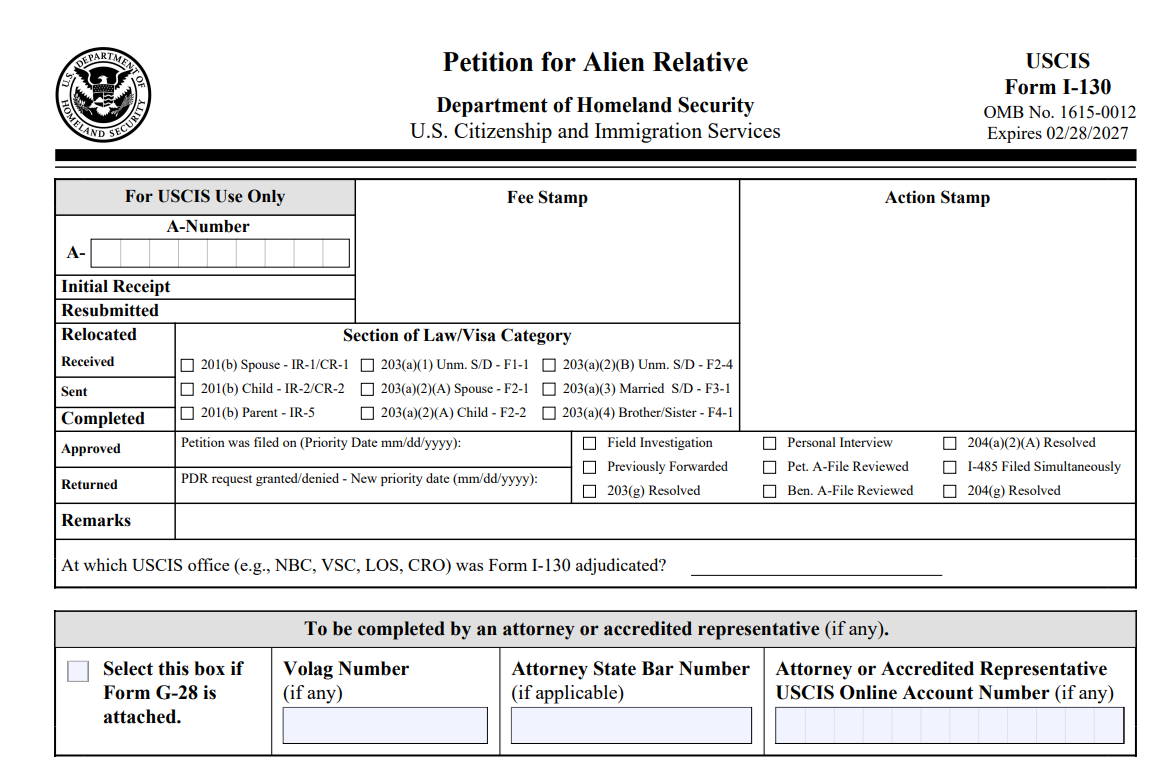
In addition to filing Form I-129, the O1 visa application should include supporting documents showing your achievements and references from peer groups and relevant organizations. Your employer should file the petition at least 45 days before the employment starting date.
Submit all the filing fee checks. The employer can use premium processing for a shorter processing time.
As an O1 nonimmigrant worker, you should follow these tips to keep your visa valid:
• Work only within the scope of your original petition or the approved amended petition.
• Avoid getting employed without work authorization.
• Don't forget to file a new petition when switching to a new employer.
• File your extension of stay applications before the visa's expiration date.
• Keep a copy of your approval notice.
• Match your departure record with the USCIS data.
Your O1 visa is valid up to three years and can be extended for up to a year, depending on how long the project or event is expected to last, as determined by USCIS. Filing a new petition extends the visa if you still have unfinished work or if the employment terms suddenly change. Proper planning, following USCIS regulations, and timely filings help visa holders maintain their immigration status while building their careers in the U.S.
Work with a competent immigration attorney at Hacking Immigration Law, LLC, when applying for an O1 visa and keeping your status valid. They can guide you on the steps you need to take if you have some work to do in the U.S., depending on your level of credentials.
Give us a call now!
1. How long is the O1 visa valid at first?
It's valid for up to three years, depending on how long you've worked on the project.
2. Can I extend my O1 visa?
Yes. File an extension petition to extend your O1 visa up to one year.
3. And if I change jobs?
Your new employer should file a separate petition, and you can't start your new job if you haven't received your approval notice.
4. Can my family come with me?
Take your spouse and children with you. They can apply for O-3 nonimmigrant status, valid for the same period as the O-1 principal’s status.
5. Can I start my green card application while holding an O1 visa?
Absolutely! The O1 allows dual intent. You can pursue permanent residency through a permanent labor certification or preference petition.