Yes — if you have held a green card for 3 years and are married to a U.S. citizen, you may qualify for naturalization before the standard 5-year wait. The three-year rule under Section 319(a) of the INA is one of the most valuable benefits in the U.S. immigration system, and most people don't know they're eligible.
The three-year rule is real, but it comes with conditions. If you've been asking, " Can I apply for citizenship after 3 years of marriage?” The answer is yes. But only if you meet every requirement tied to your marriage, residency, and physical presence. Miss any of them, and you default back to the 5-year track.
That's where experienced immigration services, like Hacking Immigration Law, LLC, make a real difference. If you're unsure how your marriage visa or original entry status affects your timeline, speaking with an immigration attorney early saves a lot of frustration.
Key Takeaways:
• The three-year rule is real. If you've been a lawful permanent resident for 3 years and you've been continuously married to and living with a U.S. citizen during that entire time, you may qualify to apply for naturalization early.
• All standard requirements still apply. Even on the 3-year track, you still need to meet physical presence, good moral character, English language, and civics test requirements.
• Timing is everything. You can file your N-400 application up to 90 days before your 3-year green card anniversary — but not a day earlier.
Get clarity on your next step toward citizenship after marriage.
Table of Contents
Under U.S. immigration law, most green card holders have to wait 5 years before they can apply for naturalization. But if you've been married to a citizen and living with them throughout your time as a permanent resident, that waiting period drops to 3 years.
This rule exists because marriage to a U.S. citizen is one of the most common paths to permanent residency. The 3-year path applies as long as you are currently married and living with a U.S. citizen spouse for the required period — regardless of how you originally obtained your green card.
In fiscal year 2024, USCIS naturalized 818,500 individuals as new U.S. citizens. While this reflects a 7% decline from the previous year, the three-year total still exceeds 2.6 million new citizens.
Meeting the eligibility requirements for the spousal naturalization track means checking every box — not just most of them. Here's what you need to satisfy at the time you file your N-400:
Your green card date matters. This is calculated from the date you were first granted permanent resident status, not from when your physical green card was issued.
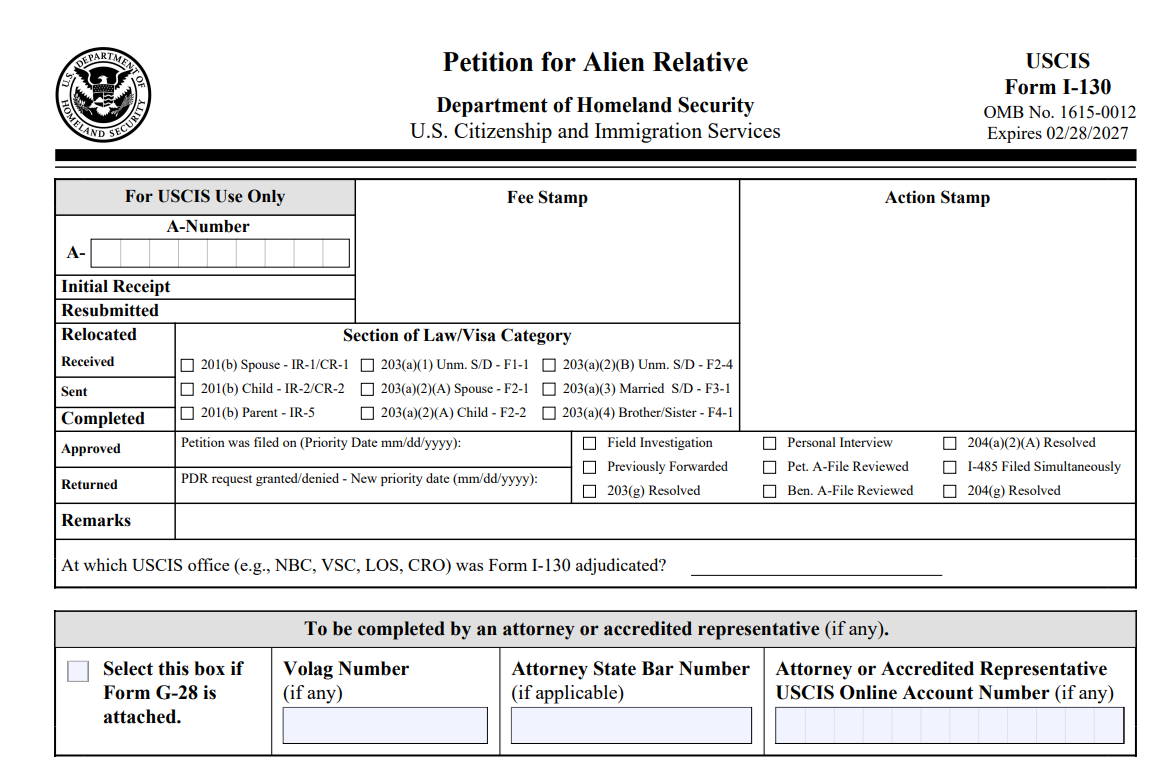
If you were married less than 2 years when your green card was approved, USCIS issued you conditional permanent resident status — a 2-year card instead of the standard 10-year one. You must remove those conditions via Form I-751, which carries a joint filing requirement: you and your spouse file together (with limited exceptions). Once conditions are removed, your 3-year clock counts from your original approval date. A marriage green card lawyer can confirm your I-751 was processed correctly before you file.
Remarrying a different U.S. citizen resets the clock. The law requires continuous marriage to the same citizen spouse.
If your spouse naturalized recently, you need to count from when they became a citizen — not from when you got your green card.
This means living together under the same roof or having a documented reason for separate residences. Proof of your shared life — joint accounts, lease agreements, photos — will likely be requested.
For the 3-year track, you need to have been physically present in the U.S. for at least 18 months out of those 3 years. Extended trips abroad can jeopardize this, so track your travel carefully.
No serious criminal history, prior deportation orders, tax fraud, or other disqualifying factors. USCIS reviews on a case-by-case basis.
These are standard across all naturalization applications — 100 civics questions (you'll be tested on 10 and need to answer 6 correctly), plus reading, writing, and speaking in English.
Your eligibility depends on the details. Have Hacking Immigration Law, LLC take a look.
FIND OUT MORE ABOUT THE CITIZENSHIP SERVICE
Once you're confident you qualify, here's how the process generally works:
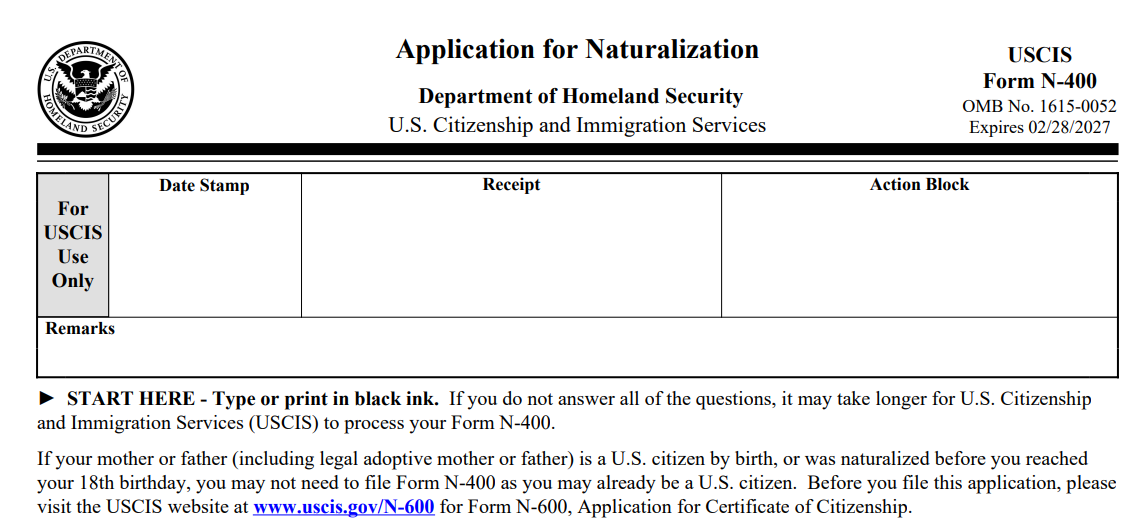
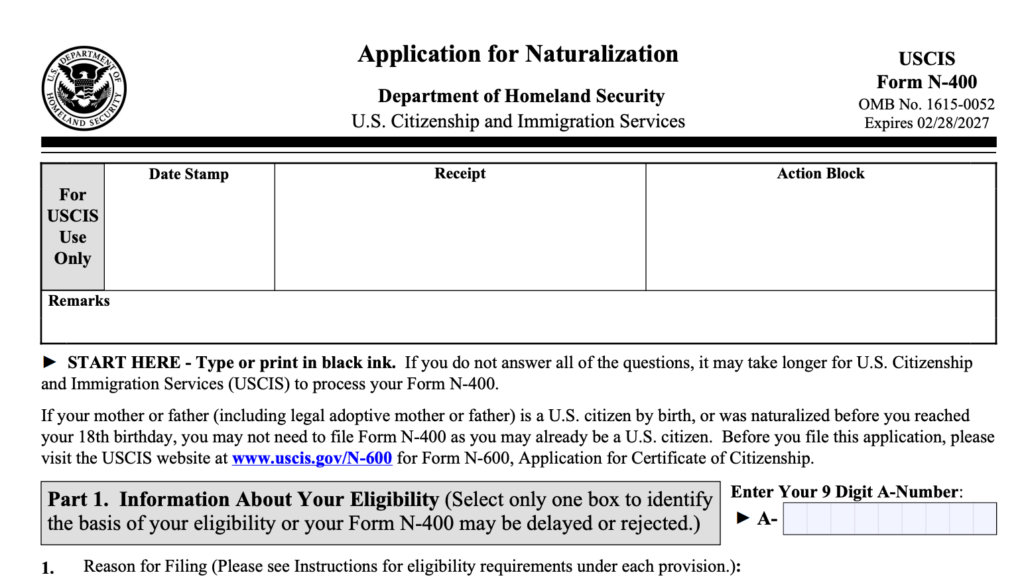
This is your official application. You can file it up to 90 days before hitting your 3-year permanent residence anniversary. Don't file too early — USCIS will reject or deny applications that are submitted prematurely.
As of the latest USCIS fee schedule, they allow applicants to request a reduced N-400 fee if they can’t afford the full cost.
Filing Fees:
• General applicants: $760 (paper) or $710 (online)
• Reduced fee ($380): You may qualify if your household income doesn’t exceed 400% of the Federal Poverty Guidelines, with proof required.
• Military applicants (INA Sections 328 or 329): $0
Important: If you’re applying for a reduced fee or a fee waiver, you must file a paper Form N-400—online filing is not available in these cases.
USCIS will schedule a biometrics appointment to gather your photograph, fingerprints, and signature for background checks.
You'll attend an interview at your local USCIS field office, where an officer will review your application, ask questions, and administer the English and civics tests.
If approved, you'll take the Oath of Allegiance at a naturalization ceremony — and officially become a U.S. citizen.
Immediate relatives of U.S. citizens — including spouses — accounted for more than 550,000 new lawful permanent residents in FY 2023, the single largest green card category. Use these tips to complete the N-400 naturalization form correctly. This will help prevent delays and improve your chances of approval.
Even qualified applicants can run into trouble. Here are the biggest pitfalls to watch out for:
• Spending too much time outside the U.S. Any single trip longer than 6 months can break your continuous residence. Multiple shorter trips can add up and hurt you, too.
• Filing too early. USCIS strictly enforces the 3-year requirement. An application filed even one day short of the required period can be denied.
• Underreporting travel or criminal history. USCIS cross-references passport records and criminal databases. Omitting information — even accidentally — can be treated as misrepresentation.
• Not having documentation of your marital life. USCIS may ask for proof of your genuine marital union: joint tax returns, shared lease agreements, bank statements, and photos together. Have these ready.
• Ignoring tax obligations. If you haven't filed U.S. taxes as required, fix that before you apply. Unfiled taxes can be grounds for denial.
• Forgetting to remove conditions first. If you're a conditional permanent resident and haven't filed the I-751 yet, you can't apply for naturalization until that process is complete.
Working with a green card lawyer can help you catch and resolve these errors before they cause a denial.
The 3-year naturalization process looks straightforward on paper, but between the documentation requirements, travel calculations, conditional residency issues, and interview preparation, there are a lot of moving pieces. A misstep can mean delays, denials, or being stuck on the 5-year track instead.
The team at Hacking Immigration Law, LLC provides comprehensive immigration services to help couples do exactly that — whether it's confirming eligibility, removing conditions, or preparing a complete N-400 application. Don't leave something this important to guesswork. Get a consultation and know exactly where you stand before you file.
Take the first step—see if you qualify for citizenship today.
Can I apply if my spouse recently became a citizen?
Yes, but your 3-year clock starts from the date your spouse naturalized, not from when you got your green card.
What if we temporarily lived apart?
Brief separations for work or family reasons may be acceptable with documentation, but extended or unexplained separations raise red flags.
Does divorce affect my application?
Yes. If you divorce before naturalization, you lose eligibility for the 3-year path and must wait until you meet the 5-year standard.
What happens if my I-751 petition is filed late?
Filing the I-751 petition late can lead to complications, including potential loss of your lawful permanent resident status. Always file on time or consult an experienced immigration attorney if you've missed the window.
If you’ve been a lawful permanent resident for three years, citizenship may be closer than you think. The three-year rule is a legitimate, often-overlooked path that can shave two full years off your wait — but only if every requirement is met and every form is filed correctly.
Whether you're exploring your options or ready to file, get qualified legal guidance before you submit anything. The right preparation keeps you on track.