If you're newly married and want to start your life together in the U.S., this is the path to permanent residency. Here's what you need to know about eligibility, required documents, and how to get started.
Getting married is a big step, and if your partner is a U.S. citizen or lawful permanent resident, it opens the door to becoming a green card holder. A marriage green card authorizes a U.S. citizen's spouse to live and work in the U.S.
Whether you're a U.S. citizen or a foreign national, the next big step for many couples is figuring out how to apply for a green card after marriage. In this guide, we’ll simplify the marriage-based green card process so you know exactly what to expect.
Key Takeaways:
• Applying for a marriage-based green card is totally doable, but it takes patience, paperwork, and proof of a bona fide marriage.
• Understanding your path—whether you’re inside or outside the U.S.—helps you avoid mistakes and delays.
• Legal help with Hacking Immigration Law, LLC, can seriously improve your chances, especially if immigration law gets complicated.
Your immigration journey deserves expert guidance — don’t go it alone.
Table of Contents
Applying for a marriage-based green card starts with the right paperwork and a clear process. Here's a simple step-by-step guide to help you through it.
First, let’s look at your situation. Are you the foreign-born spouse? Are you in the U.S. already, or living abroad? And is your spouse a U.S. citizen or a lawful permanent resident (i.e., someone with a green card)?
Your answers will determine your process:
| Your Spouse Is | You Are In the U.S. | You Are Outside the U.S. |
| U.S. Citizen | Apply to adjust status inside the U.S. | Go through the immigrant visa process |
| Lawful Permanent Resident | Waiting for a visa number may be required | Apply abroad via consular processing |
If you're already in the U.S. on a valid visa, you’ll usually adjust status through Form I-485 after your spouse files a Form I-130. If you’re outside the country, you’ll go through consular processing and wait for an immigrant visa.
Here comes the mountain of immigration forms.
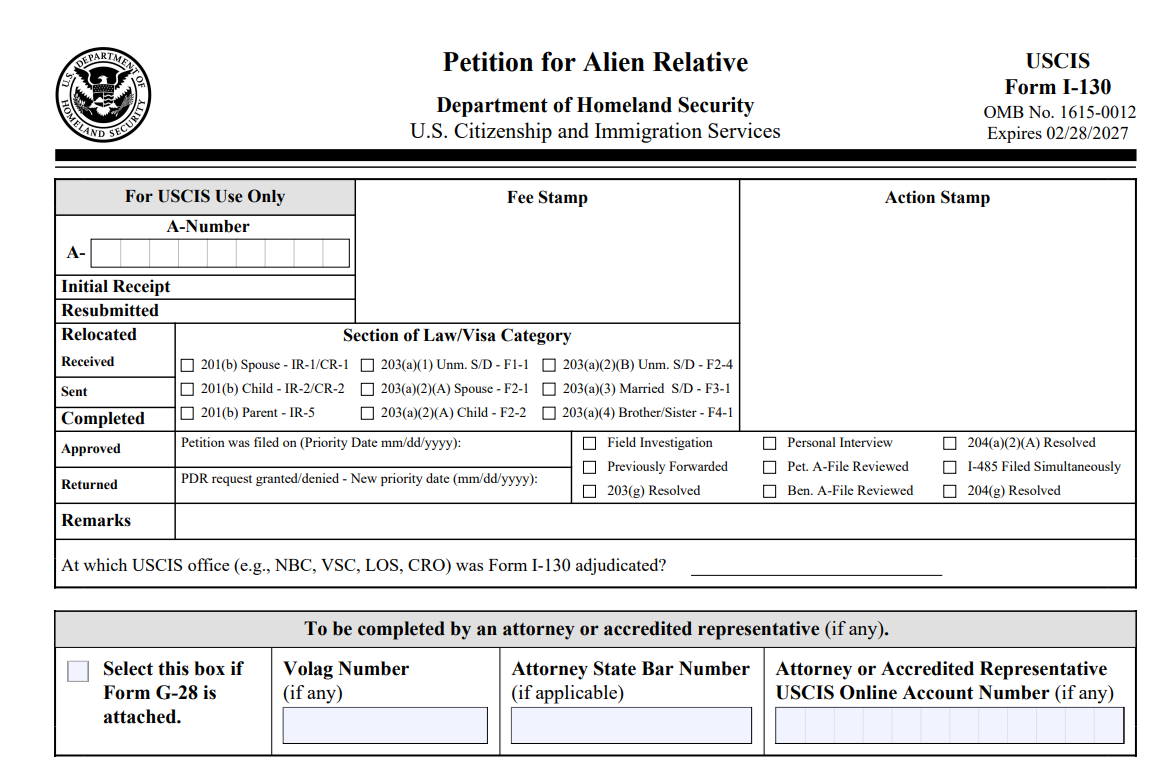
To begin with, your spouse (a U.S. citizen) files Form I-130, the immigrant visa petition. In the U.S., individuals can concurrently file Form I-485 to adjust their immigration status.
Forms you’ll likely need:
• Form I-130 – Petition for Alien Relative
• Form I-485 – Application to Adjust Status
• Form I-864 – Affidavit of Support
• Form I-693 – Results of your immigration medical examination
• Form I-765 – Application for work permit (optional but helpful!)
• Form I-131 – Advance Parole (if you want to travel during processing)
You'll also need to submit civil documents like your marriage certificate, birth certificate, and proof that any previous marriages were legally ended.
Once USCIS receives your forms, they’ll send a receipt notice—your official “we got it” letter. Save that!
This is a big one. U.S. Citizenship and Immigration Services needs to be sure you’re not in a marriage fraud situation. That’s when someone marries just for a green card—and it’s taken very seriously. In fact, suspected immigration benefit fraud can lead to denials, bans, and even criminal charges.
To avoid any doubt, you’ll need to show that your relationship is the real deal—a bona fide marriage.
Evidence you might include:
• Photos from different stages of your relationship
• Shared bills or lease agreements
• Joint bank accounts or credit cards
• Travel itineraries or tickets
• Messages, letters, or emails
• Affidavits from family or friends
If you have kids together, great. If not, that’s fine too—just show a life built together.
Processing times vary based on your location, the USCIS workload, and whether you’re applying inside or outside the U.S. In general:
• If applying inside the U.S. as the spouse of a U.S. citizen, expect about 10 to 14 months
• If applying from abroad, it's more like 12 to 18 months
You’ll receive updates along the way:
• Receipt notices for your applications
• A biometrics appointment (for fingerprints and ID photos)
• A work/travel permit if you applied for one
• Your immigration interview date
In 2023, 64.6% of family-sponsored green cards, including marriage-based ones, were issued. That’s a lot of love stories!
This is where you’ll meet with a USCIS officer (or a consular officer if you’re abroad). The purpose? To confirm your bona fide marriage and screen for marriage fraud.
Expect questions like:
• How did you meet?
• When and where did you get married?
• What’s your spouse’s favorite food?
Be yourself, but honest and consistent. Discrepancies in your answers could raise suspicion with the officer.
Need help preparing? The team at Hacking Immigration Law, LLC, offers guidance so you can feel confident and prepared.
If all goes well, the USCIS or consulate will approve your immigrant visa or green card.
Here’s what to expect next:
• If you've been married less than 2 years, you'll gain conditional permanent resident status that is only valid for 2 years
• If you've been married for 2 years or more, you’ll get a standard 10-year green card
You’ll also receive a welcome notice from USCIS in the mail, followed by the card itself.
If you get a 2-year green card, don’t forget to file Form I-751 to remove the conditions within 90 days before it expires. This proves your bona fide marriage is still ongoing.
If you divorce before those 2 years are up, things get more complicated—but not impossible. You’ll need legal guidance to show the marriage was real, even if it ended.
Get answers. Get results. Get a lawyer who knows immigration inside and out.
Hire St. Louis Immigration Lawyers
• Submitting Incomplete or Incorrect Immigration Forms. Failing to complete all required sections or making simple errors on immigration forms can delay or even derail your application. Before submitting, always ensure accuracy and completeness.
• Forgetting Essential Supporting Documents. Forgetting to include critical documents can result in delays or a Request for Evidence (RFE). USCIS must be able to verify your identity, relationship, and eligibility.
• Ignoring USCIS Notices and Deadlines. In some cases, missing a deadline may lead to your case being denied or closed.
• Overloading Your Application with Irrelevant Documents. Including excessive or unnecessary documents can overwhelm USCIS officers and create confusion.
• Applying When You're Not Eligible. Submitting an application when you're not legally eligible can result in denial and potential immigration consequences.
• Failing to Prove a Bona Fide Marriage. USCIS looks closely at whether your marriage is legitimate and not entered into solely for benefits.
• Not Preparing for the Marriage Interview. Couples who are not adequately prepared for the USCIS marriage interview may give inconsistent or vague answers. It's important to practice and understand what kinds of questions might be asked.
While it’s possible to apply for a visa or green card on your own, hiring an experienced immigration attorney can save you time, stress, and potential denials. It’s especially important to seek legal guidance if:
• You’ve overstayed a visa or entered the U.S. without inspection
• You or your spouse has a criminal history or past immigration violations
• You’ve been denied a green card or visa in the past
• There are concerns about marriage fraud
• You’re confused by complex immigration laws or forms
• You want to make sure everything is filed correctly the first time
In these immigration cases, having a trusted partner by your side is invaluable. A law firm like Hacking Immigration Law, LLC brings years of experience, personalized service, and deep knowledge of U.S. immigration law to every case. They can help you prepare your documents, respond to Requests for Evidence (RFEs), and avoid common mistakes that lead to delays or denials.
Whether you're filing for a marriage green card, seeking lawful permanent resident status, or facing removal proceedings, Hacking Immigration Law, LLC offers expert legal support to give you peace of mind and keep your case on track.
How much does it cost to apply?
Around $3,005 for couples living in the U.S.; $1,340 for couples applying from outside the U.S.
Can I work while processing my application?
Yes! By filing Form I-765, you are eligible to receive a temporary work permit in the U.S.
Can I leave the country while waiting?
Only if you filed Form I-131 (Advance Parole), leaving without it may cancel your application.
What if we’ve only been married a few months?
That’s okay, but you’ll get a conditional green card and need to prove the marriage is still real in 2 years.
Filing for a green card through marriage is a big step, but thousands of couples do it every year—and so can you. Just be honest, stay organized, and prepare for a bit of a wait.
If you need help along the way—or just want to avoid costly mistakes—talk to our team at Hacking Immigration Law, LLC. We’ll guide you through everything from your petition for an alien relative to your final green card approval.
Immigration law, much like marriage, demands commitment. Book a consultation with us, and take the first step toward your future together.