On August 1, 2025, USCIS implemented major changes to family-based immigration, including more interviews, stricter fraud checks, and increased risk of deportation. These updates signal tougher enforcement and higher scrutiny for petitioners.
The U.S. Citizenship and Immigration Services (USCIS) implemented major changes to its family-based immigration policy on August 1, 2025:
These updates do three big things in USCIs policy manual:
• Expand the list of situations where an in-person interview is required.
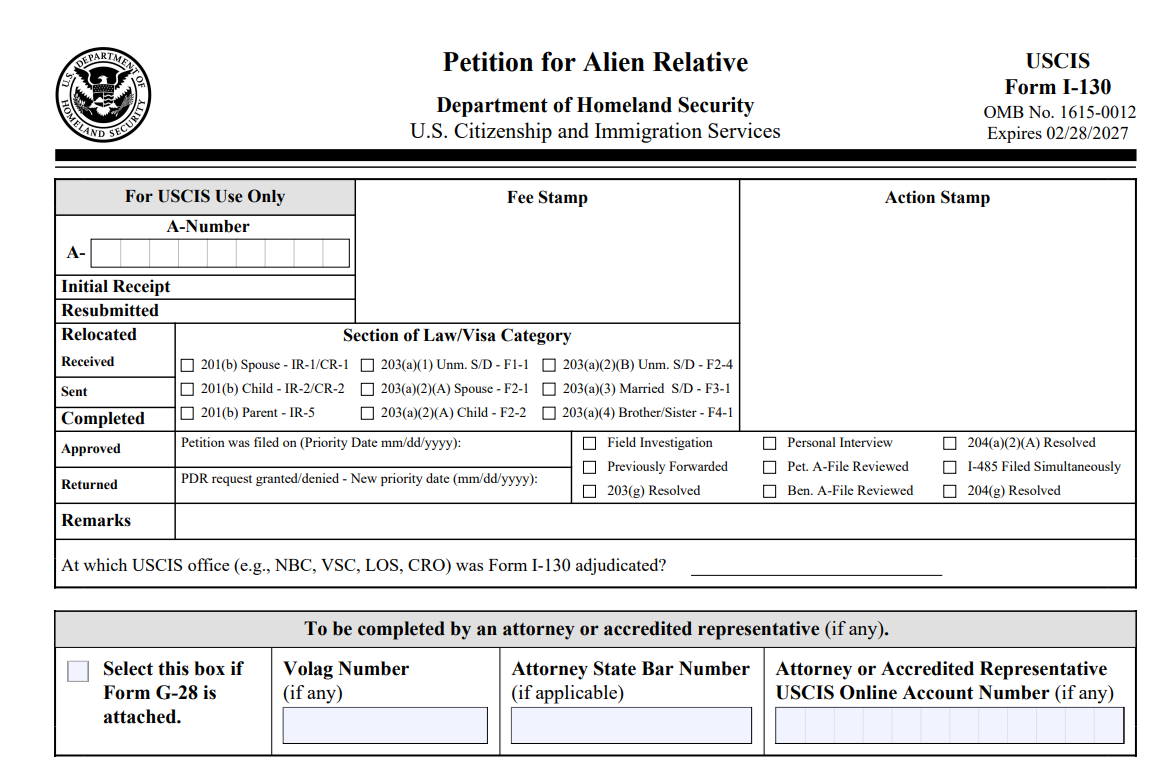
• Clarify that approval of an I-130 petition does not give legal status — and that USCIS can still issue a Notice to Appear (NTA) afterward.
• Strengthen fraud detection efforts across the board, especially for marriage-based petitions.
INDEX
Table of Contents
USCIS’s new green card rules now clearly spell out the scenarios where an interview is mandatory for standalone family-based immigrant visa petitions. These include:
If your initial filing leaves out critical documents — like a marriage certificate, joint financial records, or proof of cohabitation — USCIS will want to speak with you in person. Even if the documents are there, the totality of the evidence doesn’t paint a convincing picture of a shared life, which can raise red flags. Officers are trained to look for the “story” behind the relationship, and if that story doesn’t hold together on paper, they will probe further in an interview.
When USCIS spots contradictions — such as mismatched dates, conflicting addresses, or differing answers between forms — they will require an interview to resolve the discrepancies. The same is true if derogatory information appears, such as past immigration violations or criminal arrests, even if charges were dismissed. In these situations, the USCIS interview for a green card becomes the agency’s opportunity to assess credibility and gather clarifying testimony.
USCIS treats marriages involving minors as inherently high risk for abuse or coercion. The larger the age gap, the more intense the scrutiny will be. Interviews in these cases often involve sensitive questioning designed to confirm the relationship was entered into voluntarily and in compliance with state or foreign laws.
If USCIS has already issued an RFE or NOID and you responded, but the submission still doesn’t meet their evidentiary standards, they will escalate the matter to an interview. At that point, they want to see and hear from the couple directly. The interview is the final opportunity for the applicant to explain the gaps before a decision is made.
Sometimes the documents alone can’t answer the officer’s concerns. USCIS may need to hear personal accounts to decide which version of events is accurate. These interviews often focus on fine details about the relationship, daily routines, or life milestones to test whether the answers align with the written record.
Repeat spousal filings automatically raise questions for USCIS, especially if a prior marriage-based case ended in divorce or was withdrawn. The agency wants to ensure there is no pattern of fraudulent or convenience marriages. Interviews in these cases are more detailed, with officers likely to compare the timelines and facts of both marriages.
A prior denial or revocation means USCIS has already questioned a relationship’s legitimacy in the past. Officers will want to know what has changed and why this petition should be approved when an earlier one was not. Expect a deep dive into the differences between the prior and current relationships.
USCIS sees these cases as having a higher potential for fraud, particularly if the first marriage ended quickly and another spousal petition followed soon after. The interview will likely focus on the timeline of the prior marriage, the divorce, and the start of the new relationship. Officers want to rule out sham marriages used solely for immigration benefits.
Marriage during removal is always subject to heightened scrutiny under the Immigration and Nationality Act. The law presumes these marriages are fraudulent unless proven otherwise. Interviews in these cases are designed to test whether the couple would have married if the immigration case weren’t hanging over their heads.
Sometimes the first interview doesn’t settle the officer’s doubts. This can lead to a second, more intensive interview — often a “Stokes” interview — where spouses are separated and asked the same questions to compare answers. Discrepancies uncovered in these follow-up sessions can be fatal to a petition.
In these situations, your file will be sent to the local Field Operations Directorate for scheduling and adjudication after an in-person interview.
Hire a St. Louis Immigration Attorney
A big change — and a surprise to some — is USCIS’s reminder that an I-130 petition approved does not confer immigration status.
In the August 1st update to the manual, USCIS added a new subsection to Chapter 5 - Adjudication of Family-Based Petitions. Here’s what was added:
If USCIS determines the alien beneficiary is removable [sic] and amenable to removal from the United States, USCIS may issue a Notice to Appear (NTA) placing the beneficiary in removal proceedings. Petitioners and alien beneficiaries should be aware that a family-based petition accords no immigration status and does not bar removal.
Thus, it seems that if USCIS believes that a beneficiary is removable, USCIS can and will issue an NTA to place them in removal proceedings, even if the I-130 petition is approvable or approved.
• Your petition form I-130 can be approved on paper for the relationship, but still end up in court if there are immigration violations, criminal issues, or prior orders of removal.
• Beneficiaries should be proactive in resolving status issues instead of assuming petition approval is the final step.
• More immigrants are going to find themselves dealing with deportation at the same time that they are trying to obtain an immigration benefit.
For individuals who were out of status at the time of filing an I-130 marriage-based adjustment of status petition, USCIS may start issuing Notices to Appear in immigration court before, at or after the interview.
For individuals whose non-immigrant status ended between the time of filing the marriage-based adjustment of status case and a denial of that case, those individuals should expect to receive a Notice to Appear in immigration court for possible deportation as well.
In other words, USCIS now takes the position that if they find an immigrant anywhere in the country, including in a local USCIS field office, and that immigrant is eligible to receive a Notice to Appear, USCIS is supposed to issue that NTA.
ICE and the immigration courts are not waiting to begin deportation proceedings for USCIS to adjudicate family-based adjustment cases. This is a thing of the past.
It is also a bit short-sighted because if someone is out of status and they get a Notice to Appear in immigration court and their marriage to a U.S. citizen is approved, then the immigrant would be able to either adjust status in immigration court or to seek termination in the court so that they could go back to USCIS for adjustment there.
One big group of immigrants severely affected by this policy shift would be those subjected to expedited removal (i.e., those here less than two full years). They could apparently be removed while or after the I-130 was adjudicated.
Alongside the new interview rules in the USCIS policy manual, the agency is making it clear that fraud prevention is a top priority in family-based immigration cases. Officers are being instructed to go beyond the surface of the application and examine whether the evidence truly holds up under scrutiny.
• More rigorous document verification — USCIS will not simply accept documents at face value. They may verify marriage certificates with issuing authorities, check the authenticity of bank records, or confirm leases and utility accounts directly with service providers. Where foreign documents are involved, translations and seals may be examined for signs of tampering or forgery.
• Increased cross-checking — Officers will compare the information in your petition against a wide range of sources: prior immigration filings, visa applications, CBP records, and even information gathered from open-source or social media platforms. If the dates, addresses, or facts don’t line up, it can trigger further questioning or an investigation.
• Heightened scrutiny of repeat filers — Petitioners with a history of multiple marriage-based filings will be under the microscope. USCIS may examine the timelines of each relationship, review the outcomes of prior petitions, and look for patterns suggesting a possible “marriage-for-benefit” scheme.
USCIS intends to use every tool at its disposal to ensure that only genuine, lawful family relationships benefit from these pathways. For legitimate couples, this means preparing a case that can withstand a deeper dive — thorough documentation, consistent information, and readiness to explain every aspect of the relationship. For those attempting to game the system, the risk of detection has never been higher.
For honest applicants yearning to be a lawful permanent resident, these changes mean more preparation and possibly more delays, but not necessarily denials — provided you gather strong evidence and stay consistent in your statements.
For those with gaps, inconsistencies, or prior issues, the risk of denial — or even being placed in removal proceedings — is much higher than before.
If your case might trigger one of the interview categories, you should prepare from the outset as if an officer will be asking you detailed questions in person.
If you want to make sure your petition is airtight before filing, or you’re facing an interview under these new rules, now is the time to get legal guidance. These changes mean the stakes have never been higher for family-based immigration cases. It’s crucial that you keep track of all the latest family-based immigration news.
Get personalized legal advice to ensure your petition meets the latest USCIS standards.