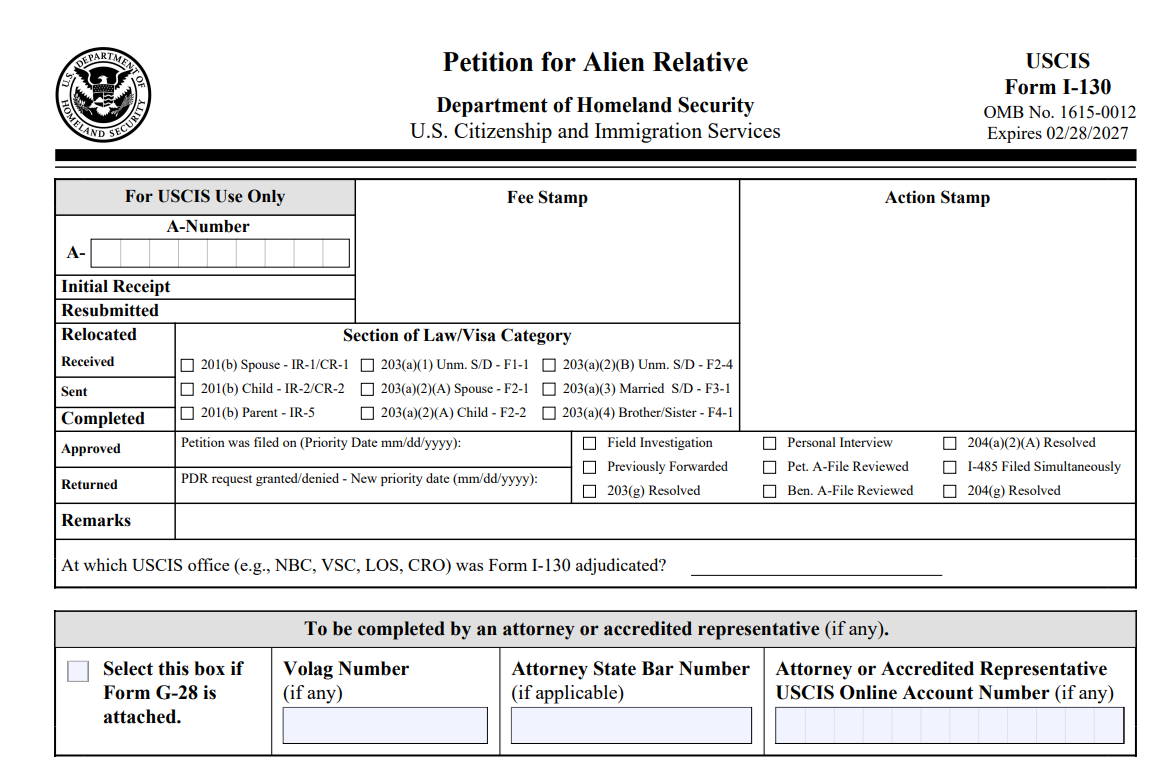
When applying for an immigration benefit with U.S. Citizenship and Immigration Services (USCIS), it’s natural to want to submit as much supporting documentation as possible. But did you know that sending extra documents, called unsolicited evidence, can sometimes hurt your case rather than help it?
You’re about to file a key USCIS petition, maybe an I‑130 marriage petition or an adjustment of status, and you want to include every document that proves your case. But is that a good idea? You’re torn between overwhelming USCIS and missing crucial proof.
Actually, tons of frantic uploads, including proof of a new lease, airline tickets, and credit card statements, can backfire. USCIS may stash your file, delay processing, or misjudge relevance. Some unsolicited documents could even confuse the adjudicator or raise red flags.
What can you do then?
Submit targeted, relevant missing evidence, and only when it strengthens your case. Ensure it’s timely, credible, and strategic. Even better: partner with Hacking Immigration Law, LLC, so you confidently upload what's needed and avoid what isn't.
Key Takeaways:
• Not all evidence helps. Unsolicited documents can overwhelm or delay your case.
• USCIS tracks uploads and may penalize by reprioritizing your application.
• Quality matters. One timely affidavit beats dozens of small documents.
• Work with immigration attorneys to craft smart evidence strategies.
Expert legal advice is crucial when submitting unsolicited evidence to USCIS.
Table of Contents
“Unsolicited evidence” is anything you upload or send after filing that USCIS did not ask for, hoping it will help your case. That might include:
• New lease agreements
• Updated financial info
• Personal photographs
• New affidavits
• Even "corrections" to your original filing
USCIS policy says applicants may submit additional evidence until a decision is made. But that doesn’t mean every piece of unstamped-on proof is a good idea.
Here are some real-life scenarios illustrating an unsolicited evidence USCIS example, where applicants or their lawyers submitted additional documents, and the impact it had on their cases.
A woman applying for an I-601 waiver for unlawful presence wanted to show that her U.S. citizen husband’s medical condition had worsened. Her attorney uploaded:
• A new doctor’s letter
• Prescription logs
• Updated test results
Outcome: Because the case was still pending and this information demonstrated increased hardship, USCIS considered the evidence. The waiver was approved without an RFE.
Takeaway: Relevant, timely evidence tied directly to a discretionary decision may help if submitted strategically.
A couple uploaded over 100 wedding and vacation photos as proof of a bona fide marriage after filing their I-130 and before the interview.
Outcome: USCIS did not acknowledge the upload. At the interview, the officer said, “We don’t review photos submitted that way unless requested.” The couple had to bring hard copies again.
Takeaway: Bulk uploads of supplementary evidence, especially without context, can be ignored.
A green card applicant realized that the translation of their birth certificate (filed with Form I-485) had missing fields. They quickly uploaded a corrected certified translation with a short memo.
Outcome: USCIS accepted the updated translation without issuing an RFE. The officer noted it in the file.
Takeaway: Fixing a known error quickly with a professional explanation can sometimes avoid delays.
A sponsor uploaded 30+ pages of bank statements, credit card statements, and tax returns after already submitting a complete Form I-864 package.
Outcome: The volume and redundancy caused confusion. USCIS issued an RFE anyway, asking the sponsor to “resubmit only the most recent 3 months of income-related documents.”
Takeaway: Too much unsolicited evidence may cause USCIS to question the accuracy or clarity of your case.
An I-601A provisional waiver applicant submitted unsolicited evidence of a new U.S. citizen child’s birth (birth certificate and pediatrician letter).
Outcome: The officer accepted the update, which added hardship factors. The waiver was granted.
Takeaway: Life changes that materially impact your eligibility or hardship analysis are worth submitting if clearly documented.
Bottom Line: Unsolicited evidence can help, but only when it’s clear, concise, and highly relevant.
Don't let uncertainty affect your immigration case. Get the legal help you need when dealing with unsolicited evidence and USCIS.
Submitting too much evidence or uploading it at the wrong time can cause real problems. Here’s a deeper look at the specific risks:
While USCIS accepts additional documents before a final decision, adding documents post-filing often pushes the case back in the queue. When your application is updated with unsolicited evidence, it might:
• Trigger a manual review that pauses automated processing
• Cause the case to be flagged for further examination
• Restart the adjudication clock, especially if the new evidence significantly alters your original submission
USCIS officers have discretion. If the evidence is seen as non-essential, redundant, or unrelated to the elements of eligibility, it might:
• Not to be reviewed at all
• Be discarded or removed from consideration
• Be stored in your A-file, but not considered in the final decision
Reminder: Officers are under pressure to maintain processing times. They are not obligated to sift through dozens of irrelevant attachments.
Submitting lots of minor documents can give the impression that:
• You’re not confident in your original submission
• You’re trying to compensate with volume instead of quality
• You may not be working with an attorney
USCIS expects clarity and organization. Unsolicited, disorganized submissions can suggest disarray, something adjudicators often associate with red flags.
Ironically, instead of clarifying your case, a mass upload can trigger a Request for Evidence (RFE) or Notice of Intent to Deny (NOID). Why?
• New evidence might contradict your original story
• Too much information introduces inconsistencies
• USCIS might demand even more documentation to reconcile the discrepancies
There are situations where unsolicited evidence makes sense. Here's when:
If something major changes after paying the online filing fee and receiving the receipt notice, submitting evidence can help ensure that the USCIS is working with current facts. Examples include:
• A newborn child
• A recent marriage or divorce
• A significant medical diagnosis
• A change in income or sponsor (affecting I-864)
Key Tip: Always explain why the new evidence matters. Use a cover letter or upload a note to give context.
Did you forget to attach a required form or your updated mailing address?
Uploading it unsolicited might prevent an RFE or NOID, especially if USCIS hasn’t noticed yet or the decision hasn’t been made.
In some cases, especially involving waivers, humanitarian relief, or discretionary benefits (like VAWA or asylum), supplemental evidence can:
• Strengthen a hardship claim
• Demonstrate changed conditions (e.g., worsening persecution abroad)
• Reflect improved moral character (e.g., rehab or community work)
In these discretionary matters, strong supporting evidence, even unsolicited, can help tip the balance in your favor.
Understanding unsolicited evidence in USCIS cases is crucial. Get expert legal guidance to navigate the process effectively.
Hire St. Louis Immigration Lawyers
• USCIS allows evidence submission until the decision stage.
• Final decisions consider timeliness and relevance.
• Evidence that clarifies or corrects the initial submission is generally acceptable.
For immigrant benefit requests, USCIS uses “preponderance of evidence”. This means stronger cumulative proof, not just more proof.
Submitting extra evidence? Here’s how to do it the right way.
Ask: Will this evidence directly impact the outcome of my case?
If the answer is “probably not,” it’s likely better to wait.
Use this rule of thumb:
Only submit unsolicited evidence if it’s material, clear, timely, and beneficial.
Don’t just upload documents blindly. A short, professionally written cover letter should:
• State the petitioner/beneficiary's name and receipt number
• Clearly explain what the document is and why it's important
• Reference how it supports eligibility criteria or corrects an error
Sample intro:
“Please find attached a certified translation of the marriage certificate, omitted from our initial I-130 filing. This document supports the bona fide nature of the marital relationship as required under INA §204(a)(1).”
Avoid uploading massive PDFs. Instead:
• Name files clearly (e.g., “2024 Joint Bank Statement.pdf”)
• Group related docs into one PDF (e.g., all tax returns)
• Avoid duplicate uploads
USCIS online accounts allow you to view prior uploads. Be thoughtful and tidy.
USCIS accepts digital uploads through your USCIS online account. However, there's no guarantee all files will be reviewed equally.
• Upload as early as possible
• Check for upload size limits (often 6MB per file)
• Keep copies and screenshots for your records
Before clicking “submit,” ask an expert:
• Does this help or hurt my case?
• Is there a better way to present this information?
• Could this trigger an unintended RFE?
Immigration law is nuanced, procedural, and unforgiving.
What seems like a helpful gesture, like uploading an extra document, can actually delay or derail your case.
That’s where Hacking Immigration Law, LLC comes in.
We don’t just help you fill out forms; we craft your legal strategy. Our immigration attorneys:
• Evaluate the strength of potential unsolicited documents
• Determine whether, when, and how to submit them
• Frame your documents in compelling legal terms
• Ensure your case remains organized, credible, and streamlined
Can USCIS reject unsolicited evidence outright?
Yes. USCIS is not obligated to consider any unsolicited material. While some officers may accept relevant updates or corrections, others may disregard additional uploads, especially if they are excessive, irrelevant, or submitted too late in the process.
It’s always a gamble unless it aligns closely with your case and is submitted with care.
How do I submit unsolicited evidence if I decide to?
You can typically upload unsolicited evidence through:
• The USCIS online portal (for eligible case types)
• Mail or courier, with a clear cover letter explaining what the documents are and why they’re important
• Submitting it at your interview, if you believe it’s timely and relevant
Important: Label the documents clearly and provide a brief explanation in a cover letter. Random uploads with no context may be ignored.
What are some good reasons to submit unsolicited evidence?
Some examples include:
• You discovered an error (e.g., incorrect translations, missing signatures)
• Life changes after filing (e.g., a new child, a job loss, a medical diagnosis)
• You’ve received key documents that weren’t available earlier (like police clearance certificates or updated tax returns)
The evidence should add material value to your case and not simply restate what’s already been submitted.
Can unsolicited evidence delay my case?
It can. Uploading a large volume of irrelevant documents may lead to:
• Delays in case review
• Miscommunication or confusion
• Triggering an unnecessary RFE
USCIS officers are under pressure to make decisions quickly. If your uploads feel like a distraction or dump of “just in case” material, they might slow things down.
Is unsolicited evidence allowed in marriage-based green card applications?
Yes, but it’s risky. Some couples try to submit extra photos, affidavits, or shared bank documents to prove the relationship is real. Unless USCIS asks for more evidence through an RFE or NOID, these additions may be disregarded.
Better Strategy: Bring any additional evidence to your adjustment of status interview and present it to the officer in person. It’s more likely to be reviewed that way.
Can I replace any initial evidence submitted with unsolicited corrections?
Yes, but with caution. If you:
• Sent in an incorrect or incomplete document
• Forgot to translate a foreign language
• Submitted something without a required certification
You can often submit an updated version as unsolicited evidence. However, include a short explanation highlighting the correction and attach both the old and new versions for transparency.
What happens if I ignore an RFE and just send new documents on my own?
Not submitting any requested evidence is a serious mistake. If USCIS has issued an RFE, your response must:
• Be timely
• Be complete
• Directly address the request
Submitting unrelated documents instead of responding to the RFE can result in a denial of your application.
Can an immigration lawyer help me decide whether to submit unsolicited evidence?
Absolutely. This is one of the most important roles an experienced immigration attorney can play.
A skilled firm like Hacking Immigration Law, LLC will:
• Analyze whether your new evidence is strategically beneficial
• Format it properly
• Include persuasive cover letters
• Ensure timely and appropriate submission
Our experience helps avoid the common pitfalls of submitting too much, too late, or in the wrong format.
Are there official USCIS guidelines on unsolicited evidence?
Yes, but they are limited. The USCIS Policy Manual and internal memoranda acknowledge that officers have discretion to accept or reject unsolicited submissions. In practice, acceptance often depends on:
• Timing
• Relevance
• Volume
• Clarity of explanation
Unsolicited evidence can be a strategic tool, but also a trap. By focusing on timeliness, relevance, clarity, and legal strategy, you can bolster petitions without bogging them down.
Partner with Hacking Immigration Law, LLC to make sure every document sends the right message. Empower your case and your future with clarity and purpose.