Prepare for your marriage green card with confidence. Ask your immigration lawyer these essential USCIS questions before starting the process.
What kind of questions will USCIS ask in our marriage-based green card case?
Before starting the immigration process, it’s essential to ask an immigration lawyer about marriage to ensure you have the right guidance and support. Hi, I'm Jim Hacking, an immigration lawyer who practices law throughout the United States from our offices in St. Louis, Missouri, and San Diego, California.
In this guide, I’m going to go over the I-130 petition with you to give you a roadmap of the kinds of questions that you might hear at a USCIS interview when your foreign-born spouse is applying for a green card based on their marriage to you. I will also highlight the importance of choosing the right immigration lawyer and how their lawyer's experience can significantly impact your case.
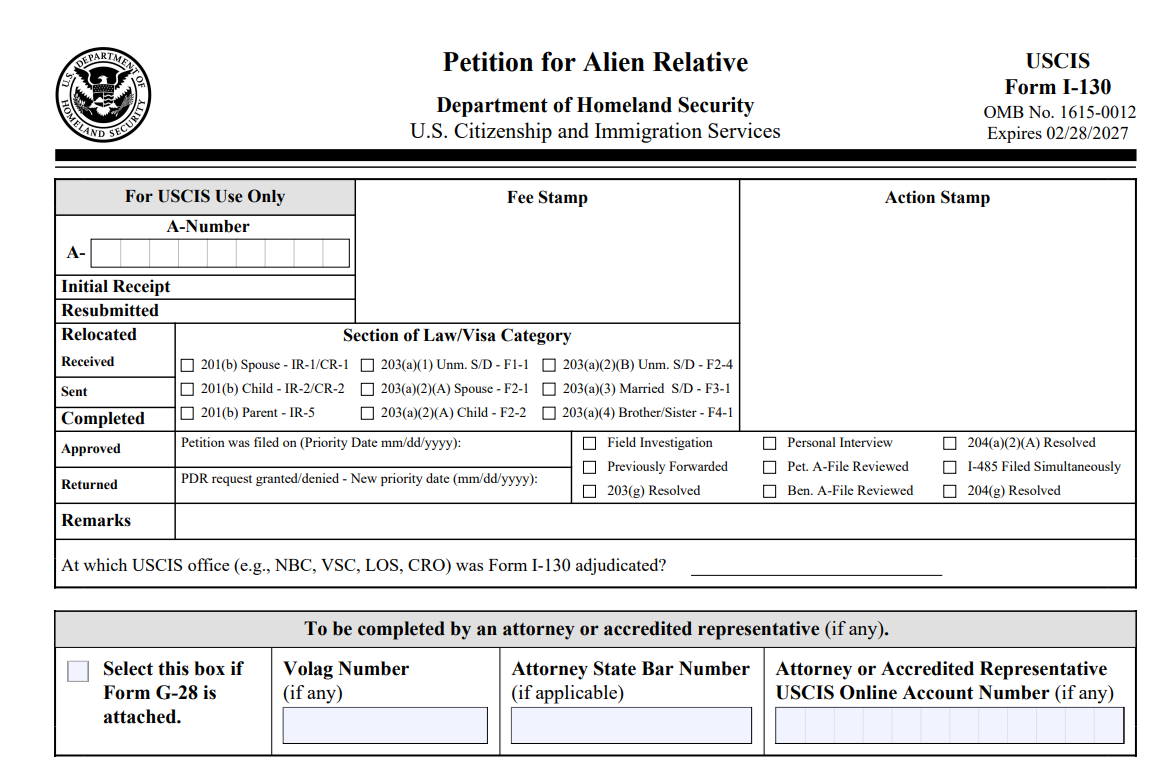
I have an empty I-130 form here that I will review with you step by step to give you a sense of the kinds of questions an immigration officer might ask to demonstrate that your relationship is valid.
Key Takeaways:
• USCIS interviews focus on proving the marriage is genuine and legally valid.
• Both the petitioner and beneficiary will be asked about their personal, marital, and immigration histories.
• Being honest and thoroughly prepared helps ensure a smoother interview process and may reduce additional filing fees or delays.
Facing a green card interview? Get expert help and clarity!
Table of Contents
The I-130 petition is filed by a lawful permanent resident or a U.S. citizen to petition for an alien relative. Its main purpose is to allow USCIS to verify whether a marriage is valid for immigration purposes. Proper legal representation by experienced immigration attorneys is critical here to avoid filing mistakes and ensure all necessary documentation is included.
Typically, an immigration interview starts with questions about the relationship. USCIS officers want to know how you met, how the relationship progressed, why you sought immigration benefits for the foreign spouse, and general details about how your relationship began.
USCIS will first confirm who you are applying for. The petitioner must be a U.S. citizen or a green card holder sponsoring their spouse.
They will ask for your full legal name, any other names you have used, and your place of birth. You will need to prove your status as a U.S. citizen or lawful permanent resident. Questions about how you obtained your citizenship or permanent residency may arise, such as:
• Were you born in the U.S.?
• Did you naturalize? If so, how?
• Did you obtain green card status through asylum, work, or a prior marriage?
Officers often review your addresses for the past five years. So be prepared to provide a detailed history.
USCIS will inquire extensively about your marital history, including:
• Details of current and prior marriages
• Divorce decrees and marriage certificates (original documents required)
• Information about your marriage ceremony (location, attendees, government registration)
• Verification that you are legally eligible to marry
Questions may include details about your parents, their birthplaces, and other personal background information.
USCIS wants to know about the petitioner’s employment history over the last five years to assess the petitioner’s ability to support the foreign national financially. This helps determine if the beneficiary might become a public charge, which is an important aspect of the immigration process that your legal representative must be prepared for.
And then they're going to start asking questions about the beneficiary.
• Who are you applying for?
• Where were they born?
• Where are they from?
• What countries are they citizens of?
As I mentioned in a prior video, they'll often ask the beneficiary questions about the petitioner's biographic information. And vice versa. They'll ask the petitioner to give the details, so they'll ask, "Okay, Joe, where were Mary's mother and father born, or what brothers and sisters does Mary have?" Excuse me.
So you'll see that from time to time, a sophisticated officer might ask questions about the other person. And so when you're answering questions, always take the direction of the officer. They may leave it open for either one of you, or they may ask a question directly to one person. It depends on the officer. It depends on what kind of mood they're in.
They're going to want to know about the beneficiary's prior marriages. So you're going to have to, again, demonstrate that the beneficiary had the capacity to marry. That's a really big issue.
Now, on the I-130, they ask about the beneficiary's entries into the United States. They want to know what classes of admissions they've had, whether they entered on a visit visa, a J-1 visa, or anything like that. They will ask about the beneficiary's employment information and where they have worked. And of course, if they worked in the United States without authorization, they will want to know about that.
Honesty is crucial here, especially regarding employment without authorization. It’s because that's someplace where people sometimes lie when they don't need to. If you are married to a U.S. citizen and you've worked without permission, then you would be forgiven for that.
From I-130 to your final interview—hire the right immigration lawyer.
HIRE A ST. LOUIS IMMIGRATION LAWYER
So, they're also going to ask about prior petitions that you filed. They want to know if you're a serial filer. If you've given immigration benefits to another person, they're going to look at your case more closely. They want to know where the beneficiary is. Of course, the I-130 petition is also used for overseas cases. So, the answers in the structure of the questions are different.
Obviously, you don't usually have an interview on an I-130 if the beneficiary is outside the United States, although we do sometimes have those. They're going to go over the application itself, and they're going to make sure that your signature is on the form. They're going to show you the I-130 and say, "Hey, is that your signature?" And you'll probably say, yes, hopefully, and then that should be it on the I-130 as long as they're satisfied with the petition.
That's usually the range of questions that you'll hear, the kinds of things that I just talked about. That's what usually happens at the I-130 portion of the interview.
After that, you'll switch over. They might go to the I-130A, which contains biographic information about the foreign national, but they usually get all that during the I-45.
So, we'll do another video about the I-45 and the questions there. We'll actually probably break it up into a series of videos because that's a lot. As I mentioned, when I first started doing immigration, I used a four-page or six-page form. Now, it's a 22-page form, and it's split down the middle. So, we'll go over those questions about immigration cases and those topics in a future video.
To confidently navigate your marriage-based green card interview, it’s essential to understand the questions USCIS will ask to confirm the authenticity of your relationship.
Partnering with a reputable law firm that provides comprehensive immigration services can make a significant difference. By asking your legal team—such as Hacking Immigration Law, LLC—the right questions early on, you’ll be better prepared and more confident throughout the entire process.
If you have questions or need an immigration consultation, call us at 314-961-8200 or email [email protected]. You’re also welcome to join our Facebook group, Immigrant Home, and subscribe to our YouTube channel for regular updates. We go live every Tuesday and Thursday at noon Central Time to answer immigration questions—don’t miss it!