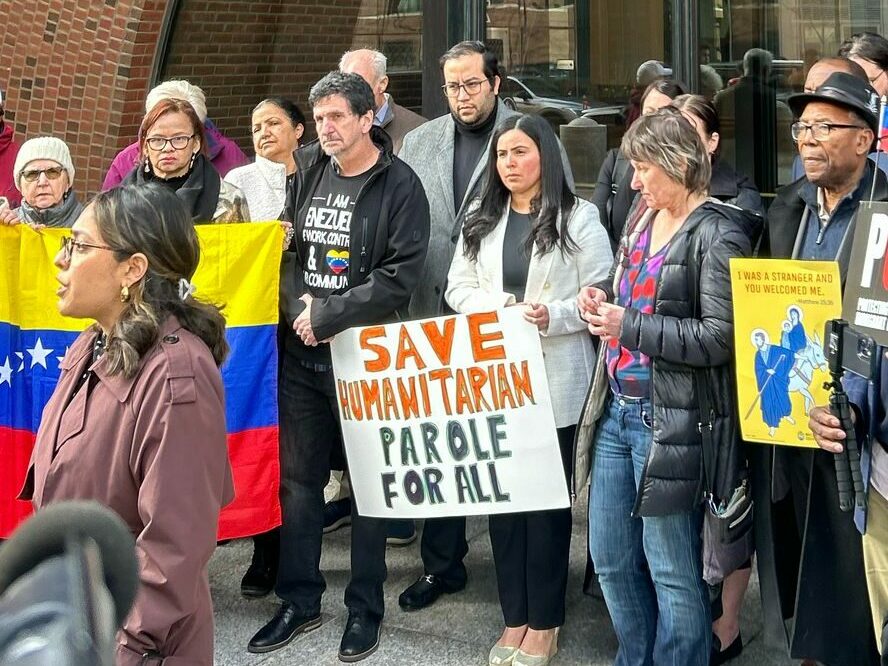
After months of silence and mounting frustration, USCIS is finally processing U4U applications and other parole cases again—but not by choice. A federal court order forced the agency to act, ending an unlawful freeze that left thousands of applicants in limbo.
After months of delay and legal pressure, U.S. Citizenship and Immigration Services (USCIS) under the umbrella of The U.S. Department of Homeland Security (DHS), has resumed adjudicating immigration benefit requests filed by parolees under the Uniting for Ukraine (U4U), CHNV (Cubans, Haitians, Nicaraguans, and Venezuelans), and Family Reunification Parole (FRP) programs. This change is a significant public benefit that comes only after a federal court ordered the agency to stop unlawfully pausing these cases.
Key takeaways:
• Court Order Forced USCIS Action: USCIS resumed processing U4U, CHNV, and FRP parole cases only after a federal court ordered it to end unlawful delays, not as a voluntary improvement or policy change.
• Backlog and Delays Persist: Although 8,855 cases were processed by late June 2025, the backlog remains large, and applicants should not expect fast or transparent decisions due to manual reviews and inconsistent internal communication.
• Legal Support May Be Needed: Parolees and sponsors facing continued delays are encouraged to escalate their cases through congressional inquiries, e-requests, or legal action, as USCIS compliance is limited and driven by obligation, not reform.
Table of Contents
The lawsuit that prompted this shift, Svitlana Doe, et al. v. Kristi Noem, et al., was filed in the District of Massachusetts. Plaintiffs challenged USCIS’s practice of putting cases on indefinite hold, particularly for Ukrainian citizens and others through special humanitarian parole status. On May 28, 2025, the court granted partial relief and ordered USCIS to resume processing those applications.
This crucial legal victory was made possible by a dedicated team of immigrant rights attorneys at Justice Action Center (JAC) and Human Rights First (HRF) who recognized the harm being inflicted by these unlawful delays and took the fight to federal court for urgent humanitarian reasons.
Their work forced USCIS to do what it refused to do: process cases according to the law. Credit also goes to U.S. District Judge Indira Talwani, who issued the preliminary injunction holding the agency accountable and protecting the rights of thousands of parolees and their immediate family members who were stuck in bureaucratic limbo.
In response, a memorandum dated June 9, 2025, from Acting Director Angelica Alfonso-Royals instructed USCIS adjudicators to move forward on cases filed by individuals paroled through the U4U, CHNV, and FRP programs. That memo authorized officers to take cases to a final decision once the agency’s usual vetting procedures were complete. Importantly, it clarified that vetting is part of the normal adjudication process and not an excuse to indefinitely delay decisions.
USCIS initially claimed that all holds were lifted as of June 19, 2025. However, after further review, developers purportedly discovered additional cases still marked as on hold due to fraud, border protection, and national security risk indicators. On June 25, 2025, those final holds were reportedly lifted as well.
The agency has since instructed adjudicators to resume work on these cases. USCIS’s Fraud Detection and National Security Directorate (FDNS) issued guidance to ensure officers follow standard vetting procedures.
This includes how to handle cases that were flagged due to derogatory information, including data collected from special screenings conducted in 2024 for CHNV parolees and their U.S.-based supporters.
According to the declaration of Kika Scott, Acting Deputy Director of USCIS, filed in Court on Tuesday, July 1, 2025, all parolees now undergo the same background checks as other applicants for the same benefit. If a background check reveals potentially derogatory information, a USCIS officer must review and resolve the issue before making a final decision. This has always been standard practice. The agency reiterated that cases would be adjudicated once the resolution process was complete, but offered no timeline.
USCIS now reports that between May 28 and June 30, 2025, the agency completed adjudication of 8,855 cases involving U4U, CHNV, and FRP parolees. While that may sound like progress, it represents only a fraction of the pending applications.
The USCIS Contact Center has also updated its scripts to provide more accurate information to applicants. However, internal inconsistency remains a problem, and applicants may still encounter USCIS employees who are unaware of the current status of these programs.
Misinformation and mixed responses are likely to continue for some time. Despite these updates, USCIS made clear that resuming processing does not mean applicants will receive timely decisions. Many cases still require manual review, according to the declaration. The agency emphasized that processing times will vary based on the nature of any derogatory information flagged during background checks.
In plain terms, this is not a policy breakthrough or a voluntary improvement. USCIS is merely complying with a court order after improperly stalling cases for months.
Applicants should not view this as a favor or a sign of renewed efficiency. Rather, it is a legal obligation that the agency delayed fulfilling until it was forced to act.
For parolees and their sponsors, the message is simple: your case should now be moving again, but don’t expect speed or clarity. USCIS has resumed work on these applications, but the backlog, lack of transparency, and risk of misinformation remain significant issues.
Are you in a temporary protected status with financial support running out? If you are affected and your immigration status continues to be delayed, it may be time to escalate. That could include filing a congressional inquiry, submitting an e-request, or, if necessary, seeking legal advice about potential litigation options such as a writ of mandamus.
If your U4U, CHNV, or FRP case is still delayed, a qualified immigration lawyer can help. Hacking Immigration Law, LLC has extensive experience and up-to-date information, holding USCIS accountable and guiding clients through complex immigration issues.
We offer immigration support services, such as:
• Checking your case status
• Filing congressional inquiries or e-requests
• Pursuing legal action like a writ of mandamus
• Resolving background check delays
The bottom line is that USCIS did not take this step out of fairness or efficiency. It acted because a federal judge told it to. And while the holds are technically lifted, parolees will need to remain vigilant, follow up aggressively, and demand accountability at every step.
Don't wait—legal support could speed up your case and protect your rights.