Imagine stepping onto the world’s biggest stage - whether it’s a Hollywood set, a cutting-edge research lab, or an Olympic arena - armed with your talent and the legal right to shine in the United States. The O1 visa is your backstage pass to turn extraordinary ability into extraordinary opportunity. Here’s everything you need to know:
You’re an immigrant with big dreams, but the U.S. work visa process feels like a maze. The O1 visa exists to let “the best of the best” work in America. However, many talented individuals struggle to navigate the jargon and legal requirements of immigration services.
If you want to apply for the visa, you can feel stuck without clear guidance. You might miss key evidence (like major awards or media coverage), misunderstand complex criteria (like “extraordinary ability” or “national acclaim”), or get overwhelmed by paperwork. This confusion can delay careers, cause anxiety, and even lead to visa denial, wasting years of hard work.
In this guide, we explain what the O1 visa is, how to qualify with your extraordinary achievements, and why getting legal help from the immigration attorneys at Hacking Immigration Law, LLC, in St. Louis can make the journey much smoother.
Key Takeaways:
• O1 is for extraordinary achievers. It’s a U.S. non-immigrant visa for people at the top of their field (science, arts, business, etc.).
• Meet specific criteria. USCIS requires documentation in at least 3 of 8 categories (e.g., scholarly articles, awards, judgeship, etc.).
• Get expert legal help from an experienced immigration attorney to ensure your O1 visa application is complete and on time.
INDEX
The O1 visa is a special U.S. visa for interested applicants with extraordinary ability or achievement.
If you’re one of the top experts or stars in your field – think Nobel Prize winners, Olympic athletes, Grammy-winning musicians, or Academy Award nominees – the O1 visa is designed for you.
There are two main O1 categories:
1. O1A: For extraordinary ability in the sciences, education, business, or athletics (note: not including arts or film/TV).
2. O1B: For extraordinary ability in the arts, or extraordinary achievement in the television industry or motion picture.
For example, an Olympic medalist or breakthrough scientist would apply under O1A, while a famous actor or award-winning director would use O1B.
In every case, you need a U.S. employer (or agent) to sponsor you, as it’s a non-immigrant worker petition (Form I-129).
To qualify, USCIS requires that you have sustained national or international acclaim in your field. That means you’re not just good – you’re among the very best.
As USCIS explains, extraordinary ability means “a level of expertise indicating that you are among the small percentage who have risen to the very top of the field.” Similarly, in the arts, it’s called “distinction” – you must be “prominent, renowned, leading, or well-known”. In film/TV (O1B), you show extraordinary achievement, which is proven by having skills and recognition “significantly above that ordinarily encountered” (basically, you’re outstanding in a crowd).
In practice, that means:
• Major awards or honors. Have you won internationally recognized prizes (e.g., a Nobel Prize, Oscar, Pulitzer, Olympic medal, etc.)? The USCIS or an immigration guideline often lists examples of such prizes.
• Peer recognition. Are you recognized by experts or critics? Maybe you’ve been invited to judge competitions or you’ve received rave reviews in major media.
• Publications and media. Has your work been featured in major trade publications, journals, newspapers, or other media? Interviews or profiles about you can count.
• Leadership or roles. Have you held a key or essential role in a distinguished organization? Or led a groundbreaking project?
• Memberships and associations. Are you a member of an association that only accepts members with outstanding achievements?
• High salary or box office success. In business or entertainment, having above-normal pay or record-breaking commercial success can help show you’re at the top.
Essentially, USCIS expects solid evidence. You usually need to meet at least three out of eight specific criteria (for O1A cases) to prove your case.
Your extraordinary abilities deserve extraordinary representation. Don’t let paperwork stand in the way of your next big opportunity.
Hire St. Louis Immigration Attorneys
USCIS lays out eight categories, and you must provide documentation for at least three. The evidence you submit should clearly connect your achievements to the O1 criteria.
Here are common evidence categories (adapted from USCIS guidelines):
1. Authorship. You authored scholarly articles in professional journals in your field. Examples include research papers in top journals, feature articles, and book chapters.
2. Published Material. There is published material by others about you or your professional work. For example, profiles or reviews of your work in a well-known industry magazine.
3. Judging. You have served as a judge or panelist for others in your field. This includes peer-reviewing grant proposals, conference committees, or judging competitions.
4. Original Contributions. You’ve made original scientific, scholarly, or business-related contributions of major significance to your field. For instance, a patented invention or a breakthrough discovery.
5. Prizes/Awards. You have won nationally or internationally recognized prizes or awards for excellence in your field. Examples: Olympic medals, major league sports championships, MacArthur “Genius” Grants, top industry awards, etc. These are very high standards (like the Nobel, Fields Medal, Pulitzer, etc.).
6. Memberships. You’re a member of associations in your field that require outstanding achievements for membership. For example, being elected to the National Academy of Sciences; ordinary memberships based on dues or years of experience do not count.
7. Critical Role. You’ve worked in a critical or essential capacity for establishments with a distinguished reputation. In other words, you played a key role in a famous company, team, or project.
8. Salary. You command a high salary or other significant remuneration compared to others in the field, as proven by contracts or other reliable evidence showing you’re paid much more than peers.
You should collect supporting documentation for each category: award certificates, membership letters, media clippings, contracts, expert letters, etc.
If traditional criteria don’t fit, USCIS allows other reliable evidence to demonstrate that you meet the high standard.
For example:
• A physicist might submit academic citations and press coverage
• A filmmaker might submit press clippings, box-office stats, and awards
In each case, you need to show “national or international acclaim” (sciences, etc.) or “extraordinary achievement” (arts/TV).
• Scholarly articles. Authored papers in peer-reviewed journals or major media.
• Major publications. Featured in major trade or professional publications or other media.
• Judging others. Served as a judge or on review panels.
• Original contributions. Made significant breakthroughs or inventions.
• Prizes. Won internationally/nationally recognized awards.
• Exclusive memberships. Belong to associations requiring outstanding achievements.
• Critical role. Worked in an essential capacity for top organizations.
• High salary. Earned a high salary or other proof of exceptional compensation.
For artists and entertainers, the evidence is similar in concept but tailored to creative fields. You generally need at least three of the following:
• Lead or starring roles. You were a lead or starring participant in productions or events of distinguished reputation (e.g., lead actor in a hit movie or star musician in a major concert tour).
• Critical acclaim. You achieved national or international recognition, as shown by critical reviews and published materials in major media (reviews in newspapers, magazines, or blogs).
• Awards or nominations. You won or were nominated for major internationally recognized awards (Academy Awards, Emmys, Grammys, etc.) or high-profile industry honors.
• Commercial success. You had major commercial or critically acclaimed successes (e.g., best-selling albums, top box-office films, high TV ratings).
• Expert recognition. You received significant recognition from organizations, critics, government agencies, or other experts. For example, a commendation from a cultural institution or industry guild.
Each bullet above should be backed by documents: award certificates, press clippings, contracts, audience numbers, or letters from experts. For instance, newspaper articles from major trade publications or industry magazines provide strong proof.
Navigating the complexities of the O1 visa requires more than talent; it demands legal precision and strategic insight.
Getting an O1 visa involves careful preparation. Here are the key steps:
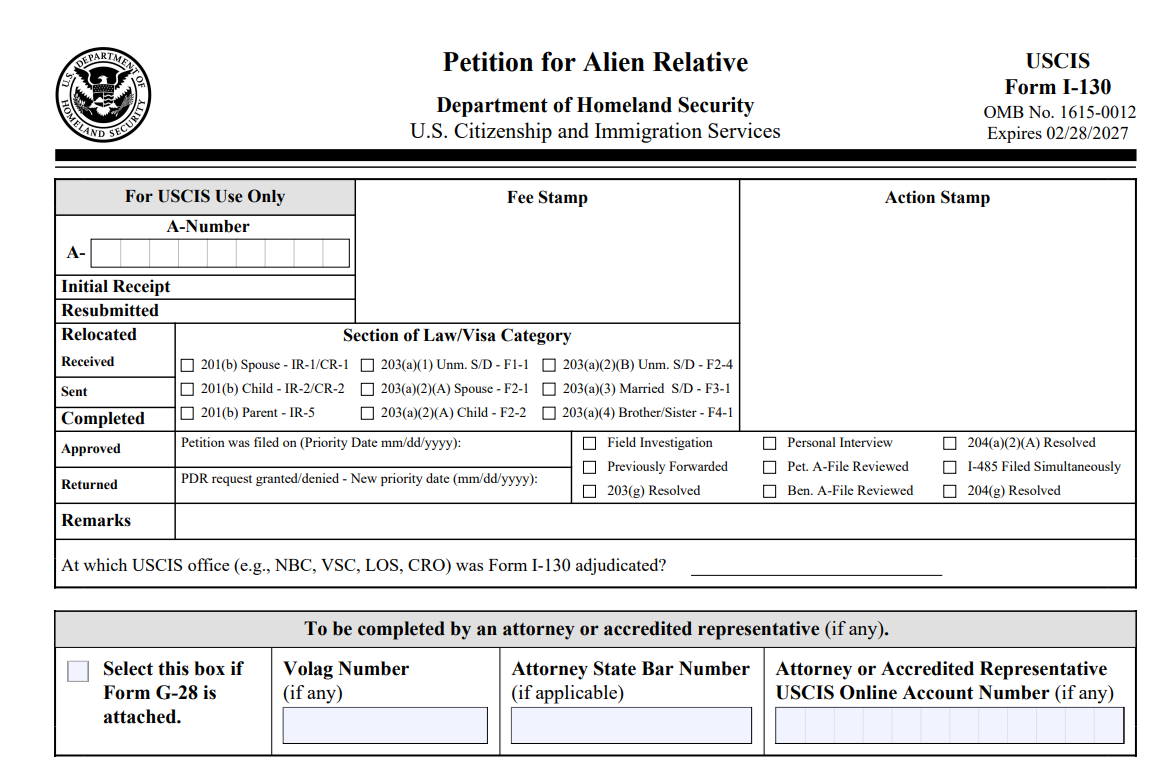
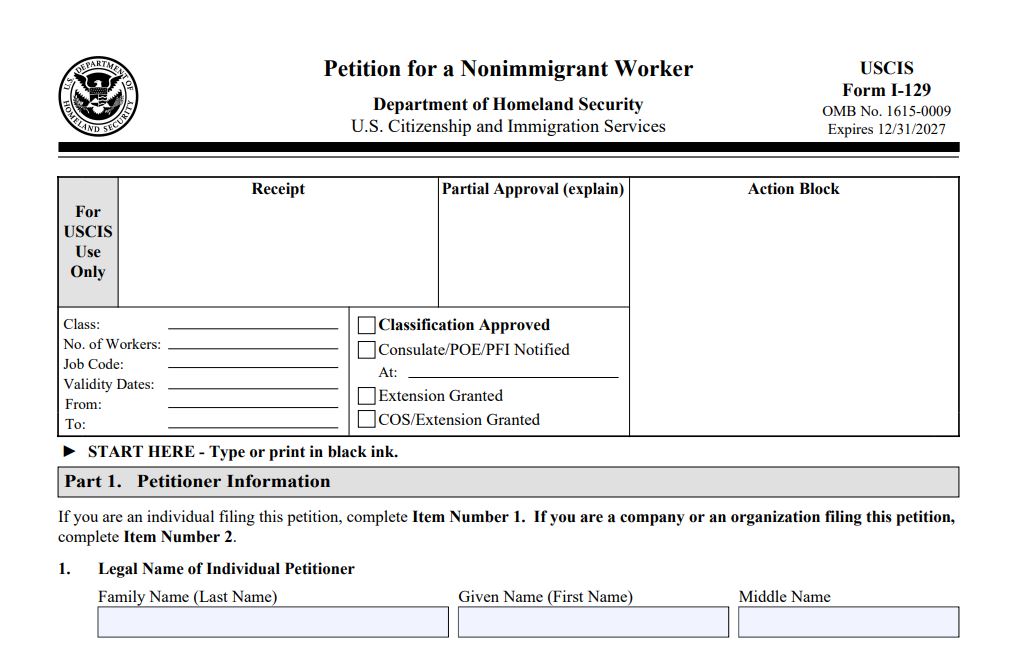
A U.S. employer, foreign employer through a U.S. agent, or U.S. agent, must file Form I-129 on your behalf. This petition officially requests your O1 status. The petitioner can file no more than one year before the work is needed, and it’s recommended to file at least 45 days before your employment start date to avoid delays.
Image Source: USCIS
Along with the I-129, the petitioner must include all supporting evidence. This includes things like copies of your awards, publications, press articles, contracts, letters, etc.
Almost every O1 petition needs a written advisory opinion from an appropriate peer group or labor union in your field. For example, if you’re a dancer, a union of dance professionals might need to comment. For O1B (film/TV), USCIS specifically requires a consultation from a labor union or management organization in that industry. The advisory opinion states whether you truly have an extraordinary ability.
If no relevant peer group exists, USCIS may waive this, but you’d need to explain why or include other expert letters.
Include a copy of a written contract between you and the petitioning employer or a detailed summary if it’s an oral agreement. Also, provide an itinerary listing the events, projects, or engagements you will work on, with start/end dates. This shows USCIS what you’ll actually be doing in the U.S.
Don’t forget the filing fee and any forms for premium processing, if desired. Make sure all documents are clear and well-organized; missing information can cause delays or a request for more evidence.
Once filed, USCIS will review the petition and decide. Because O1 cases can be complex, it’s common to supplement with extra letters and documentation to build a strong case.
From gathering evidence to crafting compelling petitions, expert legal guidance is crucial.
An O1 visa can be granted for up to three years initially. This is the “initial period” during which you can stay and work for the petitioning employer.
If your project continues, the O1 can be extended in one-year increments indefinitely as long as you remain eligible. Extensions require filing a new I-129 with USCIS.
O1 visa holders are usually allowed to enter the U.S. up to 10 days before their visa validity starts and stay up to 10 days after it ends.
If you change employers or have a material change, like a new project, your new employer must file a new or amended I-129 with USCIS, explaining the change. You cannot just start a new job without this.
If you have key support staff, like an assistant or coach, who needs to come, they may qualify for an O2 visa. However, only if they provide “integral” support to your performance and have specialized knowledge of your work.
More commonly, O3 visas are for your family: your spouse and unmarried children under 21 may apply for O3 dependent status. O3 holders get the same duration as you, but cannot work in the U.S. - they can only attend school.
If your O1 is terminated early (e.g. employer ends project), the employer/agent must pay for your reasonable return transportation costs back to your home country.
The O1 process is detail-heavy. Missing a small requirement or filing late can doom an application. Firms providing citizenship and immigration services can make a huge difference, as they know exactly what USCIS expects.
For example, experienced O1 lawyers will help you gather all the proper documentation and evidence and ensure nothing is overlooked. They also prepare and submit all USCIS forms and documents correctly, classify your case properly, and monitor the entire application process.
A good lawyer will explain different strategies (e.g., which category fits best) and liaise with USCIS on your behalf.
Working with an attorney also means you’re not alone handling queries or RFEs (Requests for Evidence) from USCIS.
If you need trusted immigration services, Hacking Immigration Law, LLC, in St. Louis, specializes in employment visas. Our St. Louis immigration attorneys provide personalized guidance for O1 applicants. We can review your achievements, help categorize evidence, and put together a strong petition package.
Q: Who can qualify for an O1 visa?
A: You must be one of the top people in your field, including motion picture or television, and other major media. For example, scientists, inventors, athletes, or business leaders can use O1A; artists, actors, and writers often use O1B. You also need a U.S. employer or agent to sponsor you and a plan to continue work in your specialty here.
Q: How do I apply for an O1 visa?
A: An employer or agent files Form I-129 with USCIS on your behalf. The petition package must include the following:
• Your evidence of extraordinary ability
• a written consultation from an appropriate peer group or labor union in your field
• a copy of any employment contract
• An itinerary of your work.
Many applicants also pay for premium processing to get a faster decision.
Q: Can my family come with me?
A: Yes. Your spouse and unmarried children under 21 are eligible to apply for O3 dependent visas. They will have the same allowed stay period as you. O3 family members cannot work in the U.S., but they can study.
Q: Do I need to stay with the same employer? Can I change jobs?
A: The O1 is employer-specific. If there’s a need to change employers, your new employer must file a new Form I-129 on your behalf. If you do this in a timely manner, you can switch jobs without leaving the U.S.. Always maintain a valid status during the change.
Q: How important is legal help?
A: Very important. The O1 visa’s requirements are detailed and subjective.
Working with our St. Louis immigration team can give you a strategic advantage. We know how to present your achievements in the strongest light, avoid costly mistakes, and meet every deadline so your application moves forward smoothly.
If you’ve already achieved greatness in your field, the O1 visa could be your next big stage. Pair your extraordinary record with the right legal expertise, and you’ll be ready to take your talents to the United States confidently, legally, and with the recognition you deserve.