You can apply for U.S. citizenship after marriage once you’ve maintained lawful permanent resident status for three years, continuously lived in marital union with your U.S. citizen spouse, and met residency and good moral character requirements. The USCIS even lets you file up to 90 days early. Read on to explore the full naturalization process, eligibility criteria, and expert tips to guide you to the Oath of Allegiance.
You’ve tied the knot with your U.S. citizen spouse and are eager to secure your permanent resident status and, ultimately, U.S. citizenship. However, uncertainty around eligibility requirements and timelines can stall your dream.
Every day you wait without applying for citizenship is a day without full federal benefits, voting rights, and the security of being a naturalized citizen. Complex forms like Form N-400 and daunting interviews with a USCIS officer can feel overwhelming.
If you’re wondering, “When can you apply for citizenship after marriage?”, here’s everything to know about the three-year rule to acing the civics test.
Key Takeaways
• Continuous residence matters. Avoid absences over six months and maintain proof of living in a marital union.
• Document everything. Joint bank accounts, leases, family photos, and affidavits all strengthen your bona fide marriage claim.
• Prepare early. File up to 90 days before hitting your three‑year mark, practice for your interview, and settle any tax or legal issues in advance.
Partnering with experienced attorneys like those at Hacking Immigration Law, LLC, increases your odds of a smooth, stress‑free path to citizenship.
Table of Contents
If you're a green card holder married to a U.S. citizen spouse, you qualify for citizenship after just three years, compared to five years for most other permanent residents.
The Nationality Act recognizes the strength of a bona fide marital union, granting spouses of U.S. citizens a faster path.
Naturalization opens doors to federal jobs, full access to federal tax returns filing benefits, and responsibilities in the democratic process, like voting.
To apply for U.S. citizenship based on marriage, you must satisfy all citizenship requirements below:
• Lawful Permanent Resident (Green Card Holder). You’ve held a permanent resident card for three years.
• Citizenship and Immigration Services (USCIS) Approval. Your permanent residence must be granted by USCIS without conditions (or conditions removed).
• Marriage to a U.S. Citizen. You and your citizen spouse must live in marital union continuously during that period.
• Physical Presence. Be physically present in the U.S. for at least 18 months of the three-year continuous residence requirement.
• Good Moral Character. Demonstrate good moral character throughout the statutory period. You should not have any aggravated felonies, domestic violence convictions, or fraud for immigration purposes.
• English Language & Civics Knowledge. Pass the English test (reading, writing, speaking) and the civics test, per naturalization requirements.
The magic number is three years. Unlike most green card holders, who must wait five years before naturalizing, spouses of U.S. citizens enjoy the expedited timeline of three years. Here’s why:
• Marriage to a citizen. Marrying a U.S. citizen demonstrates a unique tie to the country, meriting a shorter residency requirement.
• Continuous residence. During these three years, you must live in marital union with your spouse. That means no long, unexplained trips abroad. Absences over six months can break continuity.
• Physical presence requirement. At least half of those three years (18 months) must be spent physically within U.S. borders. Short vacations abroad are fine, but extended stays can complicate your application.
Tip: Keep a detailed travel log (dates, destinations, reasons) to prove your continuous residence and physical presence.
• Three-Year Anniversary: Count from the day you received your green card. Use the USCIS Early Filing Calculator to confirm you’re submitting within the 90-day eligibility window.
• 90-Day Early Filing: USCIS permits you to file 90 days before you hit three years.
• Example: The green card date is October 1, 2022. File between July 3 and October 1, 2025.
Pro Tip: Mark both dates on your calendar and set reminders.
Mark your three‑year anniversary date and plan to file up to 90 days before reaching it.
• Copy of your green card
• Marriage certificate
• Proof of spouse’s U.S. citizenship (birth certificate, passport, or naturalization certificate)
• Joint financial documents (tax returns, lease/mortgage statements, bank statements)
• Children’s birth certificates (if applicable)
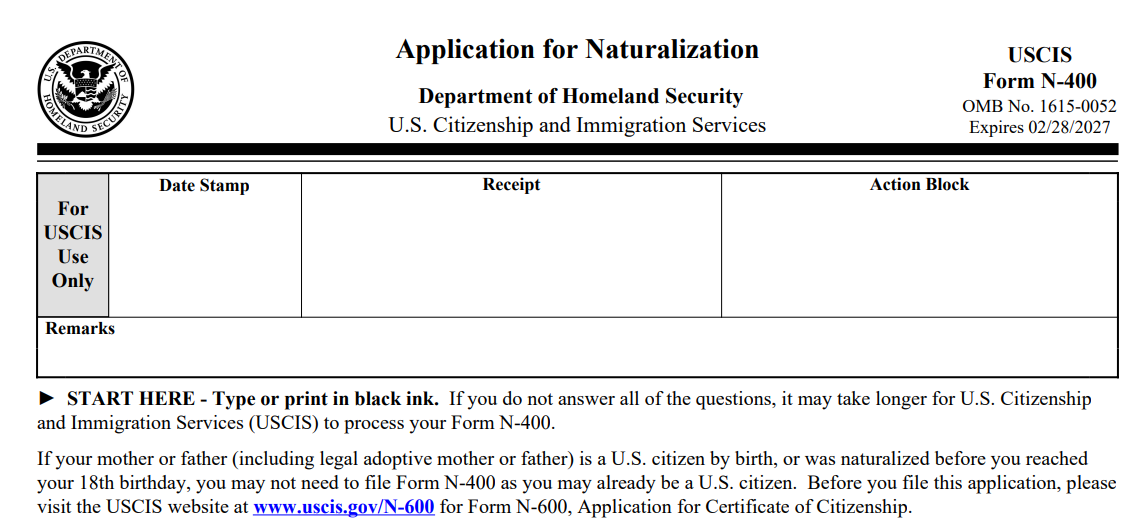
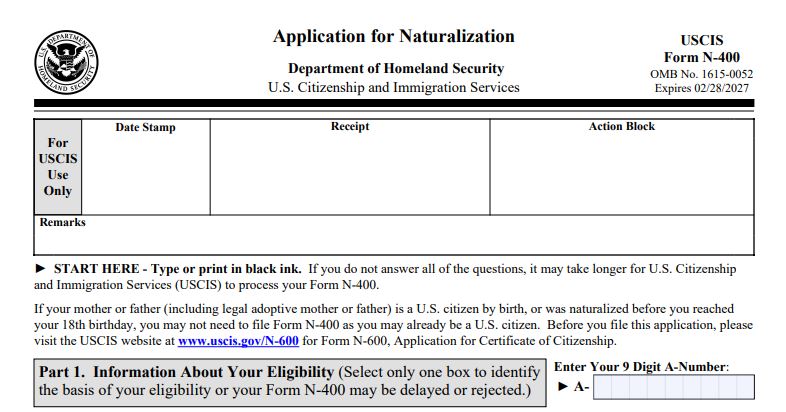
This is the application for naturalization. Answer all questions honestly.
As of 2025, the online filing fee is $710, whereas the paper filing fee is $760. Always check the latest USCIS fee schedule.
File online or by mail. Online filing lets you track your case in real time.
You’ll receive a notice for fingerprinting and photographs.
USCIS schedules you for an interview, where you’ll take the English and civics tests.
If approved, you’ll be invited to take the Oath and receive your Certificate of Naturalization.
Long Absences from the U.S.
Trips longer than six months can disrupt continuous residence.
• Solution: If you must travel, file Form N-470 to preserve residency and maintain strong ties (job, home, family).
Insufficient Joint Evidence
USCIS scrutinizes marriages to ensure they’re bona fide, not solely for immigration benefits.
• Solution: Provide diverse proofs: photos together, joint insurance, shared utility bills, children’s school records.
Criminal or Tax Issues
Certain misdemeanors or unpaid taxes can negate good moral character.
• Solution: Consult an attorney immediately to address record fixes or tax compliance.
Language or Civics Challenges
Nervousness can lead to flubbing answers.
• Solution: Practice with study guides, sample tests, and mock interviews online or with a trusted friend.
Avoid unnecessary delays and complications, and secure the immigration assistance that keeps your status on track.
Hire St. Louis Immigration Lawyers
1. Dress professionally
First impressions count. Opt for business casual attire. Think a neat blouse or button-down shirt with slacks or a skirt. Avoid overly casual items like jeans or sneakers to convey respect for the process.
2. Bring organized documents
Use a folder or binder with labeled tabs for each category:
• identity (passport, permanent resident card)
• marriage proof (certificate, joint leases)
• financial records (tax returns, bank statements)
• additional forms
Being well-prepared shows your attention to detail.
3. Be honest and concise
Answer the USCIS officer’s questions truthfully and directly. If you’re unsure about a question, ask for clarification rather than guessing. Keep your responses focused, and avoid volunteering extra information that could complicate your case.
4. Practice civics Q&A
Beyond reviewing all 100 civics questions, prioritize common topics like key U.S. government structures and historical milestones. Conduct mock Q&A sessions with a friend or immigration coach to build confidence under timed conditions.
5. Demonstrate clear English
For the English language test component, practice reading aloud and writing simple sentences. Record yourself answering typical interview questions to improve pronunciation and fluency.
6. Stay calm and respectful
Remember, the USCIS officer’s goal is to verify eligibility, not intimidate. Take a deep breath before answering, maintain eye contact, and speak at a moderate pace. Politeness and composure go a long way in creating a positive interview environment.
7. Follow up promptly
If the officer requests additional evidence or clarification, submit your response as quickly as possible, ideally within the given 30-day timeframe, to prevent delays in processing.
The naturalization process involves complex legal requirements and strict deadlines.
Image Source: USCIS
Partnering with an experienced attorney from Hacking Immigration Law, LLC can provide:
• Eligibility assessment. A thorough review of your permanent residency timeline, marriage green card status, and continuous residence requirement to confirm when you can apply.
• Document preparation & review. Expert guidance to compile your Form N-400, federal tax returns, proof of marital union, and evidence for good moral character, minimizing the risk of RFEs.
• Interview coaching. Personalized mock interviews to prepare for questions from a USCIS officer, plus practice for the English language test and civics test.
• Representation. Advocacy at your USCIS field office or district office, ensuring clear communication with USCIS and swift resolution of any issues.
• Troubleshooting complex cases. Handling conditional residence, long absences, past criminal or civil issues, and appeals if needed.
By leveraging professional immigration services, you increase your chance of a smooth, timely transition from green cardholder to naturalized citizen.
Start your journey to U.S. citizenship with the right support.
Q: Can I apply exactly on my three-year green card anniversary?
A: Yes, but USCIS allows you to file up to 90 days before your third anniversary date, so you can actually apply once you’ve lived as a green card holder for 2 years and 9 months.
Q: What if I lose my green card before applying?
A: File Form I-90 to replace it. You’ll need a valid green card to file your N-400, so initiate the replacement immediately.
Q: Does my spouse need to attend the naturalization interview?
A: Generally, no. Only the applicant attends. However, having your spouse on standby with additional documentation can be helpful, especially when questions arise about your marriage.
Q: What if my spouse loses citizenship or our marriage ends before naturalization?
A: You’ll then fall under the standard five-year residency requirement unless you marry another U.S. citizen and restart the three-year clock.
Q: Can same-sex couples apply under the same three‑year rule?
A: Yes. The three-year rule applies equally, regardless of your spouse’s gender, as long as your marriage is legally recognized in your state.
Navigating the U.S. citizenship process can be complex. At Hacking Immigration Law, LLC, our St. Louis immigration attorneys specialize in marriage-based naturalization. We’ll:
• Review your eligibility and timeline
• Organize your evidence packet for maximum approval odds
• Represent you at interviews, ensuring all questions are handled professionally
Don’t leave your American dream to chance. Contact us today and take the first step toward citizenship with confidence.