U.S. citizenship is a long, winding road. If you've been a green card holder for three years, you might have a chance of becoming a citizen of the United States of America.
Becoming a citizen is the last step of your life as an immigrant in the United States. You usually become naturalized after five years of lawfully living in the U.S. However, it's quicker if your spouse is a true-blue U.S. citizen.
You may apply for U.S. citizenship after three years of owning a green card, as long as you're eligible. Let this guide take you through the qualifications of the three-year rule and what you need to prepare for your application, among other things.
Key Takeaways:
• To become a U.S. citizen, you must be 18 or older and a resident of the United States for three years, in addition to other requirements.
• Proof of residence, a copy of your green card, and income tax returns are some of the documents you need to prepare.
• The rule can be waived if you've served in the military or are a religious worker.
• Working with an immigration lawyer simplifies your application, handling all possible lapses.
Access the help you need when times are tough.
Most green card holders wait for five years to apply for citizenship. But under the three-year rule, you can apply for U.S. citizenship if you're married to a U.S. citizen.
These parameters make you qualified for the rule:
• Must be 18 years old or older.
• A lawful permanent resident, also known as a green card holder, for at least three years.
• Living in marital union with your U.S. citizen spouse for three years.
• Must be a resident of the state or USCIS district where you're filing your application for at least three years.
• Your spouse should be a U.S. citizen for at least three years at the time of filing.
• Demonstrate good moral character for the three years.
• Have been maintaining continuous residence and being physically present for 18 months in the U.S.
• Must not have taken any trips outside of the U.S. for more than a year, unless qualified for exemption.
• Must be able to write, read, and speak basic English.
• Must pass the civics test and the citizenship test during the citizenship interview.
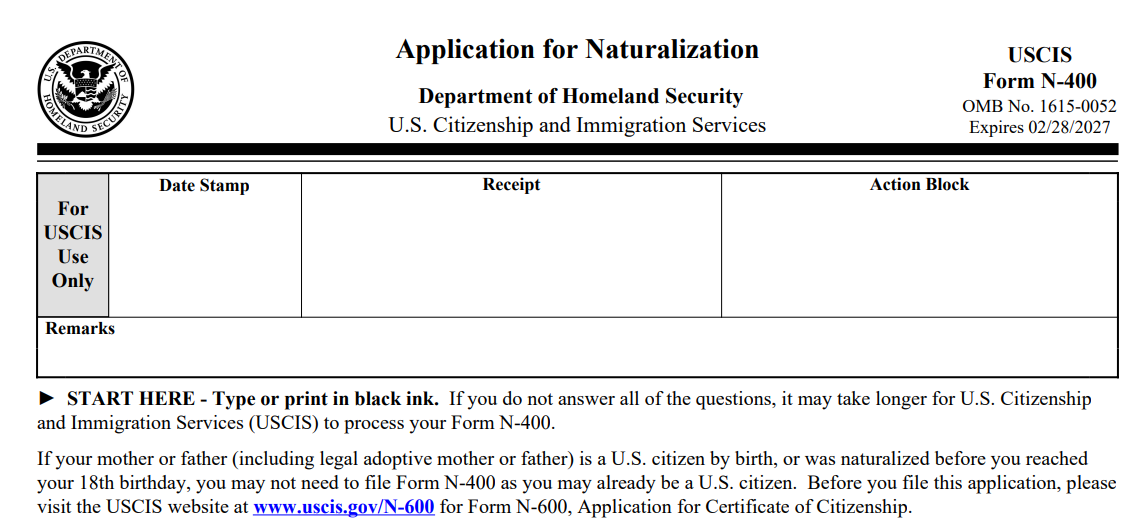
If you meet these eligibility requirements, begin your naturalization application with the Form N-400.
After verifying your eligibility, the naturalization process begins. Aside from your lawful permanent resident status, include these key documents.
• A clear copy of your green card or permanent resident card.
• Marriage certificate to prove marriage to your U.S. citizen spouse.
• Your spouse's birth certificate or naturalization certificate to prove they've been a U.S. citizen for three years.
• Income tax returns that have been jointly filed for the past three years. An explanation would be necessary if these documents weren't filed together.
• Military service records if you've served in the U.S. armed forces.
• Records of citations, prior arrests, or immigration issues, if there are any.
1. File the Form N-400 with the USCIS.
2. Pay the filing fees to get an appointment.
3. Show up at the biometrics appointment to provide your photos and fingerprints.
4. Wait for the naturalization interview. The USCIS officer will test you in U.S. history and the English language and review your application.
5. Receive a decision. If approved, you'll be attending a naturalization ceremony. If denied, you'll get a denial letter explaining the reasons and how to file an appeal.
Let's say you've been a permanent resident in the U.S. for three years, but your naturalization application gets denied after you apply. Here are some common red flags that may hinder your chances of becoming a U.S. citizen:
• Failing to prove good moral character, especially if you gave false testimony or had recent criminal offenses.
• Breaking the continuous residence requirement by spending a long time abroad.
• Separation or divorce before the three-year requirement ends.
• Incorrect and incomplete documents.
• Failing the civics test or citizenship test.
• Inconsistent immigration status.
• Unfiled tax returns.
Other naturalization applicants qualify for one or more of these reasons for denial. Once you get your denial letter, address the stated concerns immediately before shooting your second shot at obtaining citizenship.
Stuck with your immigration problem? Solve it by working with our lawyers today!
Serving honorably in the military qualifies for expedited naturalization, potentially bypassing the three- or five-year permanent residence requirement. You may also be exempt from paying some filing fees.
Some people working in ministerial or priestly functions can apply under different residency guidelines. Approval may depend on their visa history or the scope of work under religious organizations.
Become a U.S. citizen with these tips:
• Maintain permanent residency by staying in the U.S. within the three-year period.
• Keep marital union records, such as lease agreements, shared bills, and joint tax returns.
• File income tax returns within the deadline and accurately report all income.
• Work with an immigration lawyer to clear up some confusion.
• Be absent from the U.S. for a year or more without any guidance from the USCIS.
• Rely on incorrect online advice from untrustworthy sources.
• Assume eligibility without thoroughly reviewing legal criteria and immigration benefits.
• Set expectations: The English test usually includes reading, writing, and speaking tests. The civics test is all about the U.S. history and government.
• Use official USCIS materials: Download flashcards and study guides from the USCIS to study accurate and updated information.
• Practice your English daily: Talk in English to someone you know to become more fluent and confident in the interview. Read sample sentences and write answers in clear English to enhance your writing skills.
• Study civics questions: Learn the answers to all 100 questions that the USCIS provides. The interviewer will ask you 10 of these questions, and you need to answer at least six to pass this test.
• Watch mock interviews: Watching sample interviews helps you understand the interview process and how you should answer questions.
• Dress well: When attending the interview, wear formal business attire. Make sure you look neat and professional when you face immigration officers.
• Bring all documents: Have your green card, ID, tax records, marriage certificate, and all other important documents during the interview.
• Stay respectful and calm: Answer questions clearly and honestly. Politely tell the officer that you didn't understand the question and want them to repeat it.
The application process for U.S. citizenship is long, complex, and often intimidating. A small mistake can derail the entire process, wasting all your hard work.
This is where you need the expertise of an experienced immigration attorney to help you with the following:
Your permanent residence is just a small portion of all the things you need to prepare for the application. An immigration attorney will lay out all the qualifications, especially if you have a complicated marriage or immigration status.
Your attorney assists you in gathering and compiling the necessary documents and ensures they're complete, accurate, and correctly submitted. Some of these documents include proof of lawful permanent residence and good moral character.
You may forget a few important things when you file the application yourself, which can result in denials. The immigration lawyer will take care of every loophole in your application, such as tax issues and improperly calculated time for physical presence.
Your lawyer will help you prepare for your naturalization interview by reviewing mock questions, practicing your responses, and advising you on maintaining your composure when answering difficult questions.
After you get your denial letter from the USCIS, your attorney will guide you in filing an appeal or reapplication.
Work with an immigration lawyer if you've had previous criminal charges, prior visa issues, have been out of the U.S. for so long, are unsure about your spouse's citizenship status, or are a green card holder working abroad or in a government position. They have solutions on how you can apply for citizenship for each situation.
If you're a green cardholder married to a U.S. citizen, your path to naturalization is shortened. However, every case is different, and working with an immigration lawyer helps you meet all the legal requirements to proceed with your application smoothly.
Being a U.S. citizen opens more benefits for you. You'll have the right to vote and build your life for good in the country you now consider your home. If you qualify for the three-year rule, work with our St. Louis immigration lawyers at Hacking Immigration Law, LLC, to start your path to citizenship today!
What if I divorce my U.S. citizen spouse before the three-year period ends?
You'll no longer be qualified to apply under the three-year rule. Instead, you can apply after completing five years of lawful permanent residence under its standard guidelines.
Can I apply early?
Yes, you can. If you meet all other requirements, you can hand in your application up to 90 days before finishing three years as a permanent resident.
Do I need to take the English and civics tests?
Yes, you should! These tests are important for your application. Some applicants may qualify for exemptions from these exams for age-based or medical reasons.